Jahr: 2020

  • Globalisation is on the ventilator – Long live globalism!

    Photo: Worldmap as a puzzle
    Source: https://www.wallpaperflare.com/old-world-map-jigsaw-puzzle-fun-game-entertainment-the-board-wallpaper-zvmre

    Globalisation Unmasked

    The world is grappling with a deadly pandemic unleashed on the planet by the Corona Virus (SARS-CoV-2/ HCoV-19). In its wake, the votaries of globalisation who have been espousing the cause of a borderless world of business with seamless flow of international trade, capital and even human resources across the world seem to be stung by a creepy realization whether the paeans sung by them were all worth the effort. More than the social and cultural aspects of globalisation, its economic manifestation in the form of product market integration with concomitant cross-border value chains has been credited with having contributed richly to the growth of the global and national economies. Today, more than half the world has locked down their economic, social, political and cultural activities to arrest the spread of the corona virus that has already infected nearly eight million patients world-wide and claimed over four hundred thousand lives as on the 15 June, 2020. (mehr …)

  • UN reform and the COVID-19 pandemic – what role for the UN to better serve the world?

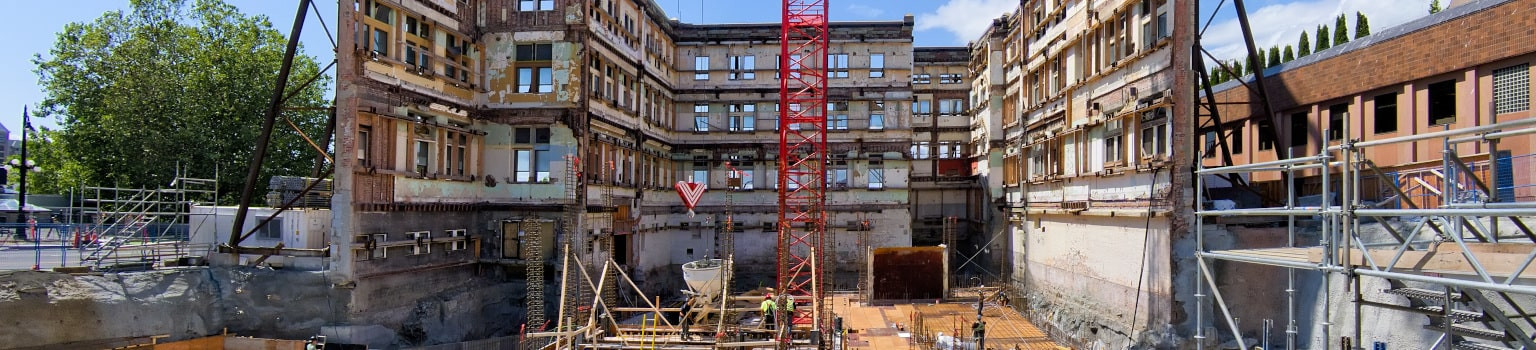
    Photo: Construction Site, as a symbol for “UN reform and the COVID-19 pandemic”
    By Artodidact on Pixabay

    The Covid-19 pandemic not only threatens to undo development gains and reverse progress in achieving the sustainable development goals of the 2030 Agenda. It also presents an early and serious test for the reform of the UN development system (UNDS), where major reform decisions were taken in 2018 to reposition the UNDS for improved, integrated and strategic support in line with the 2030 Agenda’s interlinked nature.

    (mehr …)

  • Webinar: Sustainability after COVID-19: Can the global Green New Deal movement survive the pandemic?

    Am 12. Mai 2020 organisierte das Deutsche Institut für Entwicklungspolitik (DIE) gemeinsam mit der Green Growth Knowledge Platform (GGKP) ein Webinar zum Thema “Sustainability after COVID-19: Can the global Green New Deal movement survive the pandemic?” Im Webinar diskutierten 850 Teilnehmer*innen mit Expert*innen der School of Global Environmental Sustainability der Colorado State University, des Council on Energy, Environment and Water (CEEW), ThyssenKrupp, des University College London (UCL) und des World Resources Institute (WRI). Moderiert von DIE-Wissenschaftlerin Anna Pegels, wurde diskutiert, wie es gelingen kann, dass bei politisch informierten, intelligenten, grünen Transformationsprozessen Win-Win-Situationen vor kostspieligeren Reformprozessen bevorzugt werden und sichergestellt wird,  dass die nicht-grünen Teilen der post-Corona Konjunkturpakete so viele Umweltbedingungen wie möglich enthalten. Eine Aufzeichnung des Webinars:

  • Webinar: Sustainability after COVID-19: Can the global Green New Deal movement survive the pandemic?

    On 12 May 2020, the German Development Institute / Deutsches Institut für Entwicklungspolitik (DIE) jointly organised a webinar with GGKP on “Sustainability after COVID-19: Can the global Green New Deal movement survive the pandemic?” The webinar attracted 850 participants and featured experts from Colorado State University’s School of Global Environmental Sustainability, Council on Energy, Environment and Water (CEEW), ThyssenKrupp, University College London (UCL) and World Resources Institute (WRI). Moderated by DIE researcher Anna Pegels, it discussed how politically informed smart green transformations can prioritise win-wins over costlier reform processes that risk turning into dead ends and make sure as much environmental conditionality as possible is added to the non-green bailouts that will be part of economic recovery packages. A recording of the session:

  • News from SDSN Germany

    In May 2020, SDSN Germany and the „Netzwerk Weitblick“ (network to inform media professionals about sustainability related issues) organised a joint press briefing with more than 60 participants from journalism, academia, business and civil society to discuss perceptions and expectations regarding the stimulus package of the EU with a view on sustainable development and climate change.

    Prof. Dr. Christian Calliess (German Advisory Council on the Environment), Prof. Dr. Ottmar Edenhofer (Potsdam Institute for Climate Impact Research), Kristina Jeromin (Sustainable Finance Committee), Helena Marschall (Fridays for Future), Klaus Milke (Germanwatch), Sabine Nallinger (Foundation 2°) und Prof. Dr. Ulrich Volz (SOAS University of London & German Development Institute / Deutsches Institut für Entwicklungspolitik (DIE)) contributed inputs from their perspectives.

    The press briefing was organised against the background of the announcement of the EU Recovery Fund that is supposed to lift the EU economy out of the recession caused by the Covid-19 pandemic, Prof. Dr. Anna-Katharina Hornidge (Co-Chair, SDSN Germany and Director of the German Development Institute / Deutsches Institut für Entwicklungspolitik (DIE)) explained in her introductory remarks.

    Over the last weeks, recommendations have been developed from academia, business and civil society how to shape this recovery in a way that it can also support the transformation towards a more sustainable, resilient and just future.

    The priorities of the stimulus package and the so-called Multiannual Financial Framework (MFF) of the EU will be decisive whether and to what extent the 17 goals of the 2030 Agenda for Sustainable Development as well as climate neutrality until 2050 can be reached in the EU and worldwide. It is thus of critical importance how and whether the planned measures can support the implementation of the 2030 Agenda and the European Green Deal.

    Please find here the report and audio recordings of the speakers (in German only).