Jahr: 2021

  • C-SCOPE Kick-off Meeting

    Turning the Tide: Towards Marine Carbon Observation 2.0
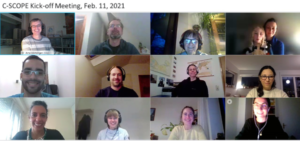
    Screenshot: SCope web meeting
    From left to right: Prof. Dr. Arne Körtzinger (GEOMAR), Dr. Tobias Steinhoff (GEOMAR), Dr. Birgit Klein (BSH), Prof. Dr. Anna-Katharina Hornidge (DIE), Carlos Musetti de Assis (UERJ), Claas Faber (GEOMAR), Dr. Henry Bittig (IOW), Dr. Karel Castro-Morales (FSU), Prof. Dr. Letícia Cotrim da Cunha (UERJ), Mirja Schoderer (DIE), Ramona Hägele (DIE). Quelle: GEOMAR

    Together with colleagues from the Helmholtz Centre for Ocean Research (GEOMAR), the Leibniz Institute for Baltic Sea Research (IOW), the Friedrich Schiller University Jena (FSU), the Bundesamt fuer Schifffahrt und Hydrographie (BSH), and Rio de Janeiro State University (UERJ), researchers of the German Development Institute / Deutsches Institut für Entwicklungspolitik (DIE) aim to take marine carbon observations to the next level in a new project.

    Funded by the German Ministry for Education and Research (BMBF) for a duration of three years, the project C-SCOPE was officially kicked off on 11 February  in a virtual meeting. The interdisciplinary team aims to improve data quality, fill observation gaps, and improve knowledge production on marine CO2 across multiple observation networks and stakeholders, focusing on three key regions: the North Atlantic thermohaline circulation system, the Baltic Sea and the Amazon rainforest system in South America.

    At DIE, Director Prof. Dr. Anna-Katharina Hornidge (Project Lead), Mirja Schoderer (Post-Doc) and Ramona Hägele (PhD) will assess how knowledge on marine CO2 observations is produced. They will look into the cognitive, technological, social and political processes that play a role in knowledge production within the research project itself, as well as practices and structures of inter- and transdisciplinary scientific collaboration. Engaging closely with diverse stakeholders, the project aims to develop a concept for relevant, reliable and accessible ocean science under the headline of Open Ocean Science and to address existing inequalities and power dynamics in marine carbon observations, contributing to an engaging ocean with more equitable data access as part of the UN Decade of Ocean Science for Sustainable Development.

    Keep up with the C-SCOPE team and follow them on Twitter!

  • Launch: European Democracy Hub

    Demokratie und menschliche Entwicklung basieren auf Teilhabe von Bürger*innen, Experten*innen und Politiker*innen aus allen Lebensbereichen. Der European Democracy Hub— eine Plattform für forschungsbasierte Diskussionen über europäische Demokratieförderung — bringt Menschen zusammen, um Lösungen für Demokratieprobleme zu entwickeln. Dr. Julia Leininger, Programmleiterin am Deutschen Institut für Entwicklungspolitik (DIE) und Mitglied des European Democracy Hubs, hat an einer Paneldiskussion mit der EU-Kommissarin für globale Partnerschaften, Jutta Urpilainen, und dem Direktor des Variety of Democracy Instituts, Staffan I. Lindberg, teilgenommen. „Der Startpunkt jeder Demokratieförderung durch die EU sind evidenzbasierte Informationen“, betonte die EU-Kommissarin zu Beginn des Panels. Julia Leininger hob hervor, dass internationale Demokratieförderung stärker auf reziproker Rechenschaftslegung basieren sollte und die EU sich aktiv für Demokratieherausforderungen in den europäischen Mitgliedsländern einsetzen müsse, um ein glaubwürdiger Partner zu bleiben.

    Schauen Sie sich die Debatte hier an:

    Mehr Einblicke in die Wirkung, Legitimität und Prozesse der Demokratieförderung finden Sie im Webspecial des DIE Warum es sich lohnt Demokratie zu fördern und zu schützen.

  • European Democracy Hub launched

    Democracy and human development require the participation of citizens, analysts, and policymakers from all walks of life. The European Democracy Hub — a new platform for research-based discussion on European democracy support — seeks to engage stakeholders and offer solutions to democratic challenges. Dr Julia Leininger, Head of Programme at the German Development Institute / Deutsches Institut für Entwicklungspolitik (DIE) and member of the European Democracy Hub, engaged in a panel debate with European Commissioner for International Partnerships Jutta Urpilainen and the Variety of Democracy Institute’s director Staffan I. Lindberg. “The starting point for our work on democracy is having evidence-based information,” said the EU Commissioner. Julia Leininger highlighted the need for mutual accountability in international support to democracy and that the EU needs to do its “homework” by openly acknowledging its member states’ democratic challenges in order to remain a legitimate partner in this field.

    Re-watch the discussion here:

    For more insights into the effectiveness, legitimacy and forms of democracy promotion see DIE’s web special Why it is worth to support and protect democracy worldwide.

  • Virtuelle Informationsveranstaltung zur digitalen MGG Academy 2021

    Logo: Managing Global Governance Network
    ©MGG Network

    Das MGG Academy-Team bietet am 26. Februar 2021 von 13.00-15.30 Uhr (UTC) eine virtuelle Informationsveranstaltung über Zoom über die digitale MGG Academy 2021 an. Interessierte Bewerber*innen und/oder Ihre Arbeitgeber können sich hierzu per E-Mail bei malika.yunussova@die-gdi.de anmelden.

  • Online-Workshop zum Thema The Role of Social Protection in Cushioning the Effects of Pandemics: First empirical evidence (and lessons) from COVID-19”, 29. Januar 2021

    Logo: PEGNet
    ©PEGNet

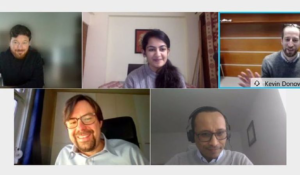
    Die COVID-19-Pandemie übt weltweit enormen Druck auf Wirtschaft und Gesellschaft aus. Dies gilt insbesondere für Länder mit niedrigem und mittlerem Einkommen, in denen viele Menschen einer informellen Beschäftigung im Niedriglohnbereich nachgehen. Der Online Workshop fand am 29. Januar 2021 statt und wurde gemeinsam vom Deutschen Institut für Entwicklungspolitik (DIE) und PEGNet organisiert.


    Screenshot: Pegnet online event
    ©DIE

    Vier hochkarätige Referent*innen von führenden Universitäten präsentierten ihre neuesten empirischen Studien zur Rolle der sozialen Sicherung bei der Abfederung der wirtschaftlichen und sozialen Auswirkungen der COVID-19 Pandemie. Garima Sharma (Massachusetts Institute of Technology) machte den Anfang und präsentierte neueste Erkenntnisse, inwieweit das Rentensystem in Indien insbesondere ältere Menschen während der COVID-19 Pandemie unterstützt. Darauf präsentierte Christian Oldiges (University of Oxford) und zeigte die Wirkungen des Beschäftigungsgarantieprogramm (MGNREGA) während der COVID-19-Lockdowns in Indien auf. Kevin Donovan (Yale University) präsentierte Belege dafür, dass Bargeldtransfers während der COVID-19-Lockdowns positive wirtschaftliche Auswirkungen auf Kleinstunternehmen in Kenia haben. Schließlich zeigte Kibrom Tafere (Weltbank) die schützenden Wirkungen des Productive Safety Net Programme (PSNP) während der COVID-19-Pandemie in Äthiopien. Im Anschluss an die Präsentationen diskutierte der Moderator, Christoph Strupat (DIE), mit den Referent*innen und dem Publikum, welche Art von sozialen Sicherungsmaßnahmen am effektivsten die Auswirkungen der Pandemie abgefedert haben und welche die Resilienz in Ländern mit niedrigem und mittlerem Einkommen in Zukunft verbessern könnten.

    Die Aufnahme zu der Veranstaltung finden Sie hier