Like hardly any other technology, digitalisation is changing and revolutionising our working and living environments, and last but not least, social coexistence. The issue also plays an increasingly important role in relations between Africa and Europe.
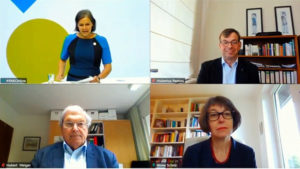
The German Development Institute / Deutsches Institut für Entwicklungspolitik (DIE), together with the African Center for Economic Transformation (ACET) and the European Center for Development Policy and Management (ECDPM), organized four online workshops on digitisation last month. African and European politicians, members of implementation organisations, entrepreneurs and representatives of international organisations met to discuss four central thematic blocks of digitisation on the basis of a previously circulated position paper. The discussion centered on strategic investments, education, higher education, and vocational training, good governance and regulation and the implementation of existing agreements between the European Union (EU) and the African Union (AU).
The direct juxtaposition of contrasting positions contributed to the broadening of the knowledge of a highly dynamic thematic complex. All participants agreed that COVID-19 acts as an accelerator of global digitisation. In view of significant investment needs and limited funds, it requires close cooperation between public institutions and the private sector, according to some participants. Africa’s digital transformation can only succeed if both infrastructural and educational policy challenges will be solved in unison.
The event is part of a series of policy briefs and events ahead of the AU-EU Summit, jointly organized by the DIE, ACET, ECDPM with the financial support of the German Federal Ministry for Economic Cooperation and Development (BMZ). The results of the discussions will be reflected in a public position paper. More information and regular updates on upcoming events can be found here.
Wie kaum eine andere Technologie verändert und revolutioniert Digitalisierung unsere Arbeits- und Lebenswelten und nicht zuletzt das gesellschaftliche Miteinander. Auch in den Beziehungen zwischen Afrika und Europa spielt das Thema eine zunehmend bedeutende Rolle.
Das Deutschen Institut für Entwicklungspolitik (DIE) hat zusammen mit dem African Center for Economic Transformation (ACET) und dem European Center for Development Policy and Management (ECDPM) im vergangenen Monat vier Web-Veranstaltungen zum Thema Digitalisierung organisiert. Hierbei trafen sich afrikanische und europäische Politiker*innen, Mitglieder von Implementierungsorganisationen, Unternehmer*innen sowie Vertreter*innen internationaler Organisationen, um auf Grundlage eines zuvor zirkulierten Positionspapiers vier zentrale Themenblöcke der Digitalisierung zu diskutieren. Es ging dabei um strategische Investitionen, Schul-, Hochschul-, und Berufsbildung, gute Regierungsführung und Regulierung und die Implementierung bestehender Vereinbarungen zwischen der Europäischen Union (EU) und der Afrikanischen Union (AU).
Die direkte Gegenüberstellung zum Teil stark kontrastierender Positionen trug zur Erkenntniserweiterung eines hoch dynamischen Themenkomplexes bei. Einig waren sich alle Teilnehmer*innen, dass COVID-19 als Beschleuniger der globalen Digitalisierung fungiert. Angesichts eines hohen Investitionsbedarfs und begrenzter Mittel bedürfe es einer engen Zusammenarbeit zwischen öffentlichen Institutionen und privaten Unternehmen, so einige Teilnehmer*innen. Afrikas digitale Transformation könne nur dann gelingen, wenn sowohl infrastrukturelle als auch bildungspolitische Herausforderungen im Einklang gelöst werden.
Die Web-Formate sind Teil einer neuen Veranstaltungsreihe, die das DIE zusammen mit ACET und ECDPM und der finanziellen Unterstützung des Bundesministeriums für wirtschaftliche Zusammenarbeit und Entwicklung (BMZ) in Vorbereitung des bevorstehenden AU-EU-Gipfels im Oktober dieses Jahres organisiert. Die Ergebnisse der Diskussionen werden in einem öffentlichen Positionspapier reflektiert. Weitere Informationen und regelmäßige Updates zu bevorstehenden Veranstaltungen finden Sie hier.
On 15 June 2020, the Council for Sustainable Development (RNE) held its first virtual annual conference. Much was different from what had been planned – a half-day format instead of a full-day meeting; a video message from the Chancellor instead of a live performance; the presentation of the draft of the revised sustainability strategy was cancelled because the Federal Government had to concentrate on containing the Corona pandemic and its social and economic consequences in recent months. The consultation on the sustainability strategy has been postponed until autumn. The RNE used the conference to discuss the issues it had dealt with in the first half of the year with external guests. On the one hand, the focus was on issues that the Council believes must be given greater weight in sustainability policy, such as public services of general interest, sustainable food systems and the decarbonisation of production and consumption. On the other hand, new topics were discussed, such as the German government’s hydrogen strategy, the urgent recommendation to align the economic stimulus package in Germany and the EU with climate and sustainability policy goals and to use the German EU Council Presidency to reform and strengthen the European-African partnership. In the final round, Imme Scholz, RNE Vice-Chairperson and DIE’s Deputy Director, summarised insights from the Annual Conference and the statements of the 3400 participants: Many see the Corona pandemic as an opportunity to sharpen their awareness of the essentials, e.g. the recognition that it is not only systemically relevant what creates income or secures economic growth, but also what makes people grow and enables them to cope with everyday life and holds society together. The reference to the common good has thus gained new importance in the public and political debate.
In summer and autumn, RNE will organise a series of online conferences in which interested parties can also enter into direct exchange. The online conference “The contribution of responsible banking and sustainability-oriented finance for resilient economic structures” will kick off on 8 July. More details will be available soon on the RNE website.
In dieser Newsletter-Ausgabe möchten wir die Vorstellung der Forschungsprojekte der Direktorin des Deutschen Instituts für Entwicklungspolitik (DIE), Prof. Dr. Anna-Katharina Hornidge, fortsetzen.
Das dritte Projekt dieser Reihe, „Wissenschaftsnarrative als weltschaffende Praktiken: Meeresspiegelveränderung in Singapur“, ist Teil des interdisziplinären Verbundprojektes Fiction Meets Science (FMS), gefördert durch die Volkswagenstiftung. Aus der Zusammenarbeit von Soziolog*innen und Literaturwissenschaftler*innen eröffnen sich neue Perspektiven hinsichtlich der Darstellung von Wissenschaft in fiktionalen sowie faktualen Narrativen. Gleichzeitig ergeben sich aus diesen Studien Einblicke in die internen Logiken wissenschaftlichen Arbeitens, als auch Erkenntnisse über dessen Platz und Bedeutung in der Gesellschaft. In der aktuellen Projektphase „FMS II: Varieties of Narrative“ liegt der Schwerpunkt auf der Untersuchung der globalen Dimensionen, der unterschiedlichen kulturellen wie regionalen Prägung des Wissenschaftskontextes und öffentlicher Diskurse, welche in die Aufbereitung von Wissenschaft einfließen. Darüber hinaus wird der Beitrag dieser Narrative in vielfältigen Genres und Medien zum öffentlichen Engagement und zu einer stärkeren gesellschaftlichen Auseinandersetzung mit Wissenschaft erforscht.
Indem das hier vorgestellte FMS-Teilprojekt das Thema Meeresspiegelveränderung in den Fokus rückt, weist es auch auf die Wichtigkeit des wachsenden Feldes der Marinen Sozialwissenschaften hin. Der dringende Bedarf an empirischer Forschung auf dem Gebiet der Ocean Governance und damit verbundener Schnittstellen zwischen Wissenschaft und Politik – hier durch die Untersuchung eines spezifischen Klimawandel-Diskurses in den Blick genommen – wird vor dem Hintergrund der im nächsten Jahr beginnenden UN-Dekade der Ozeanforschung besonders deutlich.
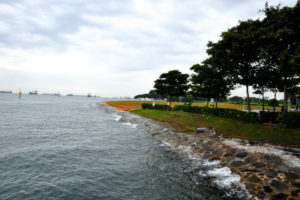
Die im letzten IPCC- Sonderbericht über die Ozeane und die Kryosphäre in einem sich wandelnden Klima (SROCC) beschriebenen schwerwiegenden Folgen der weltweiten Klimaveränderung sind omnipräsent. Singapur ist bereits von mehreren Auswirkungen betroffen. Als kleiner, aber bevölkerungsreicher und niedrig liegender Insel- und Stadtstaat ist es allerdings vor allem durch den Anstieg des mittleren globalen Meeresspiegels in hohem Maße gefährdet, und zudem als tropischer Hotspot vom Schicksal des antarktischen Eisschildes abhängig. Um das Land vor Überflutungen und Küstenerosion zu schützen, baut die Regierung auf verschiedene Anpassungsmaßnahmen. So sind etwa 70-80% der Küstenlinie Singapurs durch Polder, massive Uferbefestigungen und Steindämme, oder mithilfe von naturbasierten Lösungen wie der Mangrovenaufforstung gesichert.
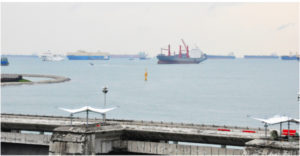
Die gravierende Bedrohung durch den Meeresspiegelanstieg infolge seiner geographischen Lage ist nur einer der vielfältigen Gründe, weshalb Singapur als Untersuchungsstandort für dieses Forschungsprojekt gewählt wurde. Es handelt sich vielmehr um eine ganz spezielle Zusammensetzung von Aspekten: Sein wirtschaftlicher Einfluss im und weit über den Verband Südostasiatischer Nationen (ASEAN) hinaus, seine große technologische Innovationskraft, seine Entwicklung und sein Selbstverständnis als Weltstadt, sowie seine starke globale Vernetzung als weltweit größter Umschlaghafen. Diese Eigenschaften ziehen eine ganz eigene Herangehensweise und Argumentation in Bezug auf Singapurs Umweltmanagement angesichts zukünftiger Herausforderungen nach sich. Selbsterklärtes Ziel des Stadtstaates ist es, nicht weniger als eine internationale Führungsrolle im Bereich „green economy“ einzunehmen. Dieser Anspruch ist jedoch nicht frei von Widersprüchlichkeiten, bedenkt man etwa die kontroversen Praktiken beim Sandabbau zur fortlaufenden Landgewinnung oder die Tatsache, dass die CO2-Emissionen pro Kopf höher als in weitaus größeren Ländern sind, so dass der ökologische Fußabdruck Singapurs seine Biokapazität um ein Vielfaches übersteigt.
Im Bewusstsein der Notwendigkeit evidenzbasierter Klimapolitik hat die singapurische Regierung mehrere Aktionspläne (z.B. „SSB – Sustainable Singapore Blueprint“) und Informationskampagnen erarbeitet, um die Aufmerksamkeit der Bürger für den Klimawandel zu wecken. Lange Zeit war das Thema des steigenden Meeresspiegels im öffentlichen Diskurs wenig präsent, ist nun aber von höchster Priorität. Damit gehen hohe Investitionen in wissenschaftliche Forschungsprogramme einher, mit der Vorgabe, Singapur als klimatologischen Wissensstandort und -knotenpunkt in (Südost-) Asien zu etablieren, inklusive einer Wissenschaftsgemeinde auf lokaler Ebene mit gleichfalls lokal erhobenen Daten. Da das Land ein leistungsstarker und einflussreicher Akteur in der Region ist, werden die dort entwickelten sozio-technologischen Ansätze im Umgang mit den Folgen des Klimawandels zusätzliche Auswirkungen auf die benachbarten Länder haben.
Die Bilder und Deutungsmuster einer Zukunft, die durch Meeresspiegelveränderung gefährdet ist, sind ebenso wie diesbezügliche wissenschaftliche Erkenntnisse gewiss nicht an regionale Grenzen gebunden. Sie reisen in unterschiedlichen Formen von Wissenschaftsnarrativen und werden von globalen in lokale diskursive Kontexte übersetzt. Das Ergründen dieser Diskurse bringt Dynamiken und strukturelle Aspekte zum Vorschein, die ein besseres Verständnis von sozialen Wandlungsprozessen ermöglichen. Im konzeptionellen Rahmen von Wissenssoziologischer Diskursanalyse und ‘Multi-sited ethnography‘ ist das Ziel dieses Forschungsprojektes die qualitative Untersuchung, wie und in welchem Ausmaß diese Narrative in politische Aushandlungsprozesse in Singapur einfließen und sie leiten. Ihren Wegen vom öffentlichen in den politischen Bereich folgend, wird dabei gleichzeitig der Mobilisierung bestimmter argumentativer Tendenzen, Vorstellungen und sinnschaffender Handlungen nachgegangen. Adaptionen aus der Populärkultur, wissenschaftsjournalistische Aufarbeitung und Regierungsprogramme werden in diesem Sinne als Quellen analysiert, die an der Konstruktion des Diskurses bezüglich Meeresspiegelveränderung beteiligt sind und somit das Zusammenspiel einer Vielzahl von Akteuren abbilden.
In this newsletter, we would like to continue introducing the research projects of DIE director Prof. Dr. Anna-Katharina Hornidge.
The third project in this series, entitled “Narrating Science as a World-Making Activity: Sea Level Change in Singapore“ is part of a larger interdisciplinary research programme Fiction Meets Science (FMS) funded by the Volkswagen Foundation. The collaboration between literary and social sciences opens up new perspectives on the portrayal of science in both fictional and factual narratives. At the same time, the programme aims at providing insights into the inner workings of science and its place in society. Reflecting on the global dimensions, diverse cultural and regional contexts of science and public discourse production, is the main emphasis of the current project phase „FMS II: Varieties of Narrative“, studying science narratives in various genres and media. Furthermore, their contributions to broader societal discourses on science as well as to public engagement with science will be examined.
With the focus on sea level change, this subproject is also pointing to the importance of the growing field of marine social sciences. Against the background of the UN Decade of Ocean Science for Sustainable Development, starting next year, the urgent need for empirical research regarding ocean governance and related science-policy interfaces – here addressed via the investigation of a specific climate change discourse – is underlined once more.
The severe impacts of global climate change, as described in the latest IPCC’s Special Report on the Ocean and Cryosphere in a Changing Climate (SROCC), are ubiquitous, and Singapore is already affected by several consequences. As a small, but densely populated and low-lying island city-state, it is particularly vulnerable to global mean sea level rise, and as a tropical hotspot very sensitive to the fate of the Antarctic ice sheet. To defend the country against inundations and coastal erosion, the government builds upon various adaptation measures: About 70-80% of Singapore’s coastline is protected by polders, hard seawalls and stone embankments, or through the use of nature-based solutions like mangrove restoration.
The acute problem with sea level rise due to its geographical location is amongst the manifold reasons why Singapore was chosen as a study ground for this research project. It is rather a particular compound of aspects, including its economic influence not merely in the ASEAN but also beyond, its technological innovation capacity, the Singaporean nation-building of a cosmopolitan identity as well as its strong global interconnections as the world’s biggest transshipment hub. These factors entail a very distinctive approach and reasoning about environmental management in a challenged future, wherein the self-proclaimed role is that of an internationally leading green economy. Yet, this statement is not free of contradictions, considering the controversial sand mining practices for the ongoing Singaporean land reclamation or the fact that the carbon emissions per capita are higher than in far larger countries, resulting in an ecological footprint highly exceeding the biocapacity of the city-state.
Recognising the need for evidence-based climate policies, the Singaporean government started developing several action plans (e.g. “SSB – Sustainable Singapore Blueprint“) and information campaigns to raise awareness for climate change amongst its citizens. For a long time, the topic of rising sea levels was not on the public discourse agenda, but is now set on high priority. This goes hand in hand with high investments in academic research programmes with the pronounced objective to develop Singapore as a knowledge hub in climate science in (Southeast) Asia, relying on a local database and a local scientific community. As a powerful player in the region, Singapore’s socio-technological practices in tackling the consequences of a changing climate will have further impacts on the neighbouring countries.
The imaginaries of a future challenged by sea level change and respective scientific knowledge are certainly not limited to a regional level. They travel in various forms of science narratives and are translated from global discursive contexts to local ones. An examination of these discourses, revealing dynamics and structural aspects, allows a better comprehension of social transformation processes. Drawing on the concept of multi-sited ethnography and the Sociology of Knowledge Approach to Discourse, this research project aims to qualitatively assess how and to what degree these narratives inform and guide national policy-making in Singapore. By following them on their ways from the public to the political sphere, it also explores the mobilisation of certain argumentative currents, ideas and meaning-making activities. Cultural adaptations, science journalism and government programmes will be analysed as sources co-constructing the discourse on sea level change and depicting the interplay between a variety of actors.