Jahr: 2020

  • Building Back Better: MGG Network draws common lessons from the Covid-19 crisis

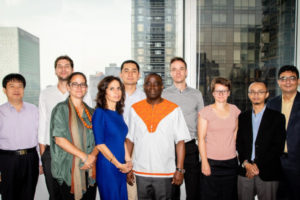
    Photo: Managing Global Governance (MGG) Group
    MGG partners from National Schools of Public Administration of Brazil, China, India, Indonesia, Mexico and South Africa at a network meeting in July 2018 in New York. ©DIE

    Facilitated by the Managing Global Governance (MGG) Programme  of the German Development Institute / Deutsches Institut für Entwicklungspolitik (DIE), the National Schools of Public Administration (SPA) of Brazil, China, India, Indonesia, Mexico and South Africa have been collaborating over the past few years in order to strengthen knowledge exchange and learning among them. On 14 July 2020, a group of 16 participants attended the online workshop ‘Building Back Better’. The participants shared experiences and developments related to the current Covid-19 pandemic and planned activities for the implementation of the initiative ‘Building Back Better’. Coordinated by the United Nations System Staff College (UNSSC) and DIE the initiative is part of the ‘New York Programme of Action’ (NYAP) that was set up by the group in July 2018. Further activities will combine online trainings in a so-called ‘train-the-trainer’ format, a research of national training schemes for the public sector and the SPAs online conference on October 27-29, 2020.

    The schools involved are the Administrative Staff College of India (ASCI), the National Institute of Public Administration, Indonesia (NIPA), the National Institute of Public Administration, Mexico (INAP), the National School of Government, South Africa (NSG), the National School of Public Administration, Brazil (ENAP), the Institute of International Strategic Studies Party School, China (CCPS), the Shanghai Institute of International Studies (SIIS).

    The activities focus on developing key learnings on how training institutions can address the challenges of the Covid-19 pandemic and align their training activities to the change of needs and structural conditions. This includes the exploration of the opportunities of digital training formats.


  • Building Back Better: MGG-Netzwerk zieht gemeinsame Lehren aus der Covid19-Krise

    Photo: Managing Global Governance (MGG) Group
    MGG-Kooperationspartner*innen aus den nationalen Verwaltungshochschulen Brasiliens, Chinas, Indiens, Indonesiens, Mexikos und Südafrikas; hier bei einem Treffen in New York im Juli 2018. ©DIE

    Im Rahmen der Wissenskooperation des Managing Global Governance (MGG) Programms hat am14. Juli ein Online-Treffen von Vertreter*innen der nationalen Verwaltungshochschulen des MGG-Netzwerks und des Wissenszentrums für Nachhaltige Entwicklung der Fortbildungsakademie des Systems der Vereinten Nationen (UNSSC) stattgefunden. Es diente dem Austausch zwischen den Partnerinstitutionen über die durch Covid-19 veränderte Situation in Brasilien, China, Indien, Indonesien, Mexiko und Südafrika. Bei dem Treffen wurden die Folgen der Pandemie für die Aus- und Fortbildung im öffentlichen Dienst sowie für die Umsetzung der Agenda 2030 für nachhaltige Entwicklung thematisiert. Die 16 Teilnehmer*nnen der beteiligten Institutionen – Administrative Staff College of India (ASCI), National Institute of Public Administration, Indonesia (NIPA), National Institute of Public Administration, Mexico (INAP), National School of Government, South Africa (NSG), National School of Public Administration, Brazil (ENAP), Institute of International Strategic Studies Party School, China (CCPS) und Shanghai Institute of International Studies (SIIS) – erarbeiteten die Umsetzung und Weiterentwicklung des von UNSSC und DIE initiierten Maßnahmenpakets „Building Back Better“. Es gehört zum 2018 vereinbarten „New York Aktionsprogramm“. Zu den geplanten Aktivitäten zählen ein Online-Training für die Ausbildenden der Hochschulen (sogenannte ‚Train-the-trainer‘-Formate), ein Forschungsprojekt zu nationalen Ausbildungssystemen für Beamt*innen und Angestellte des öffentlichen Dienstes sowie die Jahreskonferenz der Kooperationsgemeinschaft, die vom 27. bis 29. Oktober 2020 online stattfinden soll. Ziel der Aktivitäten ist es, im internationalen Austausch, gemeinsam Lehren aus der Covid-19-Krise und den daraus entstandenen Herausforderungen für Aus- und Fortbildung zu ziehen und die Chancen digitaler Angebote für eine stärkere Nachhaltigkeitsorientierung zu nutzen.

  • BMZ supports the creation of the “Global Tax Expenditure Database” (GTED)

    Since the beginning of July 2020, the German Federal Ministry for Economic Cooperation and Development (BMZ) supports the creation of the first global database on tax expenditures. The project is implemented by the German Development Institute / Deutsches Institut für Entwicklungspolitik (DIE) in partnership with the Swiss think tank Council on Economic Policies (CEP). The term “tax expenditures” refers to tax incentives, reliefs or exemptions granted by governments in order to, for instance, attract investments, facilitate access to basic goods and services or support specific economic activities. Those may be noble causes, but more often than not the real dimension of these mechanisms and their effective benefit for the general public remain completely unknown. Most governments do not report the totality of tax expenditures granted, or they do not report them at all. In those cases where data is made available it becomes obvious that this is not a minor issue. Governments may forego tax revenues of up to seven per cent of the “Gross Dometic Product (GDP)” – in some cases even more.

    DIE project lead and senior researcher Christian von Haldenwang observes:

    Photo: Christian von Haldenwang, Wissenschaftlicher Mitarbeiter im Forschungsprogramm „Transformation politischer (Un-)Ordnung”
    Christian von Haldenwang, ©DIE

    “For the first time, the Global Tax Expenditure Database  will enable researchers, government officials and civil society to get a clear picture on the extent to which states release information on tax expenditures. Data on individual countries can be contrasted with information from other sources, or compared to other countries in the region and worldwide. Our ambition is to improve the informational basis for research and public debate. In addition, we want to incite governments to produce regular, encompassing and public reports on tax expenditures.”

    GTED will be made public on a website in early 2021, at the latest.

  • BMZ-Förderung für die „Global Tax Expenditure Database“ (GTED)

    Seit Anfang Juli 2020 fördert das Bundesministerium für wirtschaftliche Zusammenarbeit und Entwicklung (BMZ) den Aufbau der weltweit ersten globalen Datenbank für Steuersubventionen. Das Vorhaben wird vom Deutschen Institut für Entwicklungspolitik (DIE) gemeinsam mit dem schweizerischen Think Tank Council on Economic Policies (CEP) durchgeführt.

    Der Begriff „Steuersubventionen“ (Global Tax Expenditure) bezeichnet steuerliche Vergünstigungen, die von Regierungen gewährt werden – beispielsweise, um Investitionen anzulocken, den Zugang zu Gütern des Grundbedarfs zu erleichtern oder bestimmte wirtschaftliche Aktivitäten gezielt zu fördern. Der Zweck mag nobel sein, aber das tatsächliche Ausmaß der Vergünstigungen sowie ihr Nutzen für die Allgemeinheit bleiben oft völlig im Dunkeln. Die meisten Regierungen berichten gar nicht oder nur unvollständig über die von ihnen bewilligten Vergünstigungen. Vorliegende Daten zeigen allerdings: Hier handelt es sich nicht um Kleinigkeiten. Den Staaten können auf diesem Wege Steuereinnahmen in Höhe von bis zu sieben Prozent des Bruttoinlandsprodukts – in Extremfällen sogar mehr – entgehen.


    Photo: Christian von Haldenwang, Wissenschaftlicher Mitarbeiter im Forschungsprogramm „Transformation politischer (Un-)Ordnung”
    Christian von Haldenwang, ©DIE

    Christian von Haldenwang, der das Projekt DIE-seitig leitet, meint dazu:

    „Mit Global Tax Expenditure Database (GTED) erhalten Forschung, Regierungen, aber auch die Öffentlichkeit, erstmals Klarheit darüber, über welche Steuervergünstigungen die Staaten berichten. Sie können diese Daten mit Informationen aus anderen Quellen abgleichen und mit anderen Ländern in der Region oder auch weltweit vergleichen. Damit wollen wir nicht nur die Forschungs- und Informationslage verbessern, sondern auch die Regierungen dazu anspornen, regelmäßig, umfassend und öffentlich über Steuervergünstigungen zu berichten.“

    Spätestens Anfang 2021 soll GTED über eine Webseite der Öffentlichkeit zugänglich gemacht werden.

  • From our doctoral candidates: Small and Medium Enterprises (SMEs) Finance

    Photo: Christoph Sommer arbeitet im Forschungsprojekt Soziale Kohäsion in Afrika am Deutschen Institut für Entwicklungspolitik (DIE)
    Christoph Sommer, ©DIE

    How should financial systems be designed to allow small and medium-sized enterprises (SMEs) to access external finance?  Christoph Sommer, researcher at the German Development Institute / Deutsches Institut für Entwicklungspolitik (DIE) investigates this in his dissertation. SMEs play a crucial role in low- and middle-income countries as they account for most firms and more than half of the formal jobs (even significantly more when considering informal jobs as well). Furthermore, SMEs foster inclusive development and thus contribute to reduce poverty and income inequality. Yet, SMEs face particular challenges in accessing finance as they often cannot meet the requirements of the standard credit assessment such as securities (certified ownership of land and buildings), audited financial statements, credit histories and the like.

    Development and trends like a growing microfinance sector or increasing digitalisation change the landscape of actors and instruments in the financial system. It is pivotal to understand the consequences of these changes for SMEs and to shape them in a positive manner. In the first part of his dissertation, Christoph Sommer explores the interactions between microfinance and the SME financing activities of conventional financial institutions. The purpose of his research is to examine how microfinance can be reconciled with functioning SME finance in the conventional financial system. In his second paper, he studies the importance of longer-term finance (‘patient capital’) for SMEs since the share of short-term finance further increases because of the promotion of digital finance – potentially with unintended negative consequences for SMEs.

    The findings of his dissertation can support decision-makers in designing respective policies that improve SMEs’ access to finance and thus foster inclusive economic development.


    Christoph Sommer works in the research project Social Cohesion in Africa at the German Development Institute / Deutsches Institut für Entwicklungspolitik (DIE) and writes his dissertation at the Heidelberg University. He studied Economics at the University of Tübingen, University of Botswana and Yale University.