Jahr: 2020

  • Multilateralism – the status quo is not enough

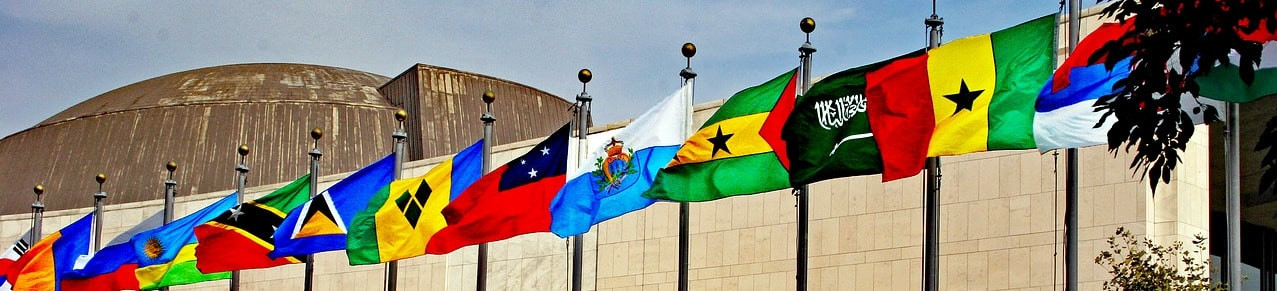
    Header: Flags in Front of United Nations
    Source: https://www.needpix.com/photo/786825/

    These are difficult times for multilateral action. Many are looking full of hope to Germany, whose Alliance for Multilateralism provides a key counterpoint to the “My country first” maxim. As such, it is all the more important for the German Government to set out a clear and substantive position in its new white paper on multilateralism. It must communicate clearly to the German people and other states why working with other nations, while often difficult and requiring constant compromise, is just as much in Germany’s own interest as strong, independent international organisations and global, universally applicable norms and rules. The Federal Government also needs to outline the specific changes for which it intends to advocate.
    (mehr …)

  • News from SDSN Germany

    Panel Discussion on sustainability policies and the COVID-19 pandemic

    Logo SDSN Germany
    ©SDSN Germany

    SDSN Germany organised together with United Nations Association of Germany (DGVN) a panel discussion on sustainability policies in Europe and the COVID-19 pandemic.

    The 2019 European Sustainable Development Report by SDSN & IEEP had been presented at this occasion followed by a discussion on  how the recovery after the COVID-19 pandemic can also become a chance for the transformation towards a more sustainable and just future.

    Carolin Mulack (DGVN) and Janina Sturm (SDSN Germany) welcomed over 70 participants. Finn Woelm (SDSN) presented the ESDR2019 and Elise Zerrath facilitated the following panel discussion with Sophia Bachmann (Youth Delegate for Sustainable Development), Christine Hackenesch (German Development Institute), Axel Schäfer (Member of the German Parliament) und Finn Woelm (SDSN).

    The conference report can be found here: (in German only)

    The ESDR 2019 can be found here (in German only).

  • Neues von SDSN Germany

    Logo SDSN Germany
    ©SDSN Germany

    Gemeinsam mit der Deutschen Gesellschaft für die Vereinten Nationen (DGVN) veranstaltete SDSN Germany am 7. Juli 2020 eine Online-Paneldiskussion zu Nachhaltigkeitspolitik in Europa und der COVID-19-Pandemie.

    Ziel war es, den „2019 Europe Sustainable Development Report“ von SDSN und IEEP (Institute for European Environmental Policy) in Deutschland vorzustellen und mit den Expert*innen die Frage zu diskutieren, wie der Wiederaufbau nach der COVID-19-Pandemie als Chance für die Transformation in Richtung einer nachhaltigen und gerechteren Zukunft gelingen könne.

    Nach der Begrüßung durch Carolin Mulack (DGVN) und Janina Sturm (SDSN Germany) stellte  Finn Woelm (SDSN) den ESDR2019 vor. An der von Elise Zerrath (UN ECE) moderierten Paneldiskussion wirkten Sophia Bachmann (Jugenddelegierte für nachhaltige Entwicklung), Christine Hackenesch (Deutsches Institut für Entwicklungspolitik), Axel Schäfer (MdB, Mitglied des EU-Ausschusses & im Parlamentarischen Beirat für nachhaltige Entwicklung) und Finn Woelm (SDSN) mit.

    Die deutsche Fassung des ESDR2019.

  • Innovations for Sustainability in a Post-Pandemic Future – 3rd TWI2050 Report

    The impacts of the Covid-19 pandemic affect all areas of our globally connected life. The pandemic reveals that current lifestyles are not resistant to crises. At the same time, the crisis highlights the need to intensify efforts to soon achieve a transformation to sustainability. In the latest report by The World in 2050 (TWI2050) initiative, Julia Leininger (Head of DIE Programme ‘Transformation of political (dis-)order’) as one of the lead authors as well as Anita Breuer, Ariel Hernandez and Christopher Wingens contributed to the assessment of potential positive benefits of innovation for a more sustainable and resilient future. In addition, the report discussed the negative impacts and challenges of the pandemic. A particular focus is placed on inclusive institutions, social cohesion and evidence-based policy-making. In this sense Julia Leininger emphasises a “prioritisation and renewal of the science-policy-society interface for evidence-based transformations built on a culture of trust, academic freedom, communication of accurate information, and a reinvigoration of global science organisations, highlighting that transnational crises require global context-sensitive responses.“

    More on this topic: TWI2050 webpage; in  DIE’s projects „Sustainable Development Pathways Achieving Human Well-being while Safeguarding the Climate and Planet Earth (SHAPE)“ and „Implementing the 2030 Agenda: Integrating Growth, Environment, Equality and Governance“.

  • Innovations for Sustainability in a Post-Pandemic Future – 3. TWI2050 Bericht

    Die Auswirkungen der Covid-19-Pandemie umfassen alle Bereiche unseres global vernetzen Lebens. Die Pandemie offenbart, dass aktuelle Lebensweisen nicht krisenfest sind und die Transformationen zur Nachhaltigkeit forciert werden müssen. Im neuen Bericht von The World in 2050 (TWI2050), tragen Julia Leininger, Leiterin des Forschungspgrogramms‚Transformation politischer (Un-)Ordnung‘, als eine der Lead Authors sowie Anita Breuer, Ariel Hernandez und Christopher Wingens zur Analyse der möglichen positiven Wirkungen von Innovationen für eine nachhaltigere und resiliente Zukunft bei. Zudem werden die negativen Auswirkungen und Herausforderungen der Pandemie betrachtet. Im Umgang mit der Pandemie sind inklusive Institutionen, gesellschaftlicher Zusammenhalt und evidenzbasierte Politik wichtig. In diesem Sinne spricht sich Julia Leininger für „die Priorisierung und Erneuerung des Science-policy-society Interfaces für evidenzbasierte Transformationen [aus], die auf einer Kultur des Vertrauens, akademischer Freiheit, der Kommunikation genauer Informationen und einer Neubelegung globaler Wissenschaftsorganisationen aufbauen; betonend, dass transnationale Krisen globale kontextsensitive Antworten erfordern.“

    Mehr zum Thema: TWI2050 webpage; in den DIE-Projekten „Sustainable Development Pathways Achieving Human Well-being while Safeguarding the Climate and Planet Earth (SHAPE)“ und „Wachstum, Umwelt, Ungleichheit, Governance: Umsetzung der Agenda 2030“.