 Last night the UK government together with UN climate officials announced that the UN climate change conference “COP26” that was set to convene in Glasgow, Scotland, in November 2020, will be postponed into 2021 in response to the ongoing Corona crisis. (mehr …)
Jahr: 2020
-
Curb your enthusiasm: Corona may slow down multilateral process, but must not derail global climate policy
-
Lessons for Global Cooperation from the COVID-19 Pandemic

Picture by Gerd Altmann on Pixabay The COVID-19 (or coronavirus) disease has led to a major pandemic that has spread to virtually all countries of the world. Although at the time of writing the epidemic has mainly hit South East Asian and Western countries (see Figure below), it is likely that Developing Countries (DCs) will also be heavily affected in the weeks to come. (mehr …)
-
Three questions to… Anna-Katharina Hornidge
Since 1 March 2020, Professor Dr Anna-Katharina Hornidge has been the new Director of the German Development Institute / Deutsches Institut für Entwicklungspolitik (DIE). The newsletter editors asked her about the initial goals and challenges she sees for her work at DIE and what is moving her these days.
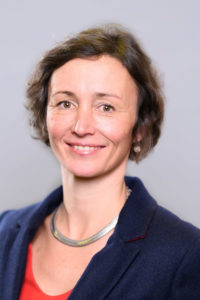
Anna-Katharina Hornidge new Director of DIE, Photo: Benjamin Westhoff, ©DIE Editors: What are you looking forward to most in your new role as Director of DIE?
Anna-Katharina Hornidge: I am looking forward to, together with the entire team of DIE, filling this very special field of expertise and partnership that we cover here at the institute. It lies between empirical development research and theory discussion, an explicitly communicated orientation towards applying the research, policy advice as well as university teaching and training. This broad setup offers us the exciting opportunity to constantly challenge ourselves scientifically and within the policy realm.
Editors: What role do you currently see for global cooperation and development research in times of Corona?
Anna-Katharina Hornidge: The Corona crisis is testing the structures of global cooperation and collaboration. Are they, and the claim to solidarity that defines them, viable and workable in times of increasingly demarcated borders? Many of our partner countries in Asia, Africa and Latin America will be severely affected by the crisis. Some are affected already. The task of development research and policy is to support health systems, the economy and social systems in our partner countries in overcoming the crisis in the interests of the global common good. Germany must ask itself what role it wants to play in the international system of states during and after the crisis – and act accordingly now. Germany’s Presidency of the Council of the European Union, which we will assume in the second half of this year, is an opportunity to demonstrate a pioneering role in development policy.
Editors: What would you like to be able to say after 100 days in office?
Anna-Katharina Hornidge: My original plans were to establish a marine governance research focus. Additionally, it is our aim to jointly develop further the third-party funding strategy of the institute. In terms of content, I would like to reflect on the Institute’s current research strategy together with the scientists, and we want to address the question of what kind of science, policy advice and training the DIE stands for under its new management. These points continue to play an important role. However, they have been complemented by the current global situation: At the moment, the focus is on keeping an eye on the health and special situations of our staff and at the same time ensuring that we continue fulfilling our mandate as an institute also under the current circumstances. I would therefore like to take this opportunity to express my sincere thanks for the special commitment of all employees of DIE in these dynamic times: I would like to thank all those in the administration who support me and the management in realizing flexible solutions, and all academic staff members who continue to ensure research, training and consulting for the institute in this situation characterized by substantial uncertainty. I would also like to thank the lively network of DIE, you and many other partners and friends of the institute, who continue collaborating virtually and creatively. On the basis of this great support, I am nevertheless looking forward to the first and all following weeks in office with much joy and optimism.
-
New work measurements and different family life in Brasil

©freepik.com Dear MGG team,
Thank you very much for the initiative of asking for perspectives from the network. This maintains our spirit alive especially in this moment.
Firstly, I will start to share my personal feelings and secondly Enap’s actions to soften this period.
(mehr …) -
Drei Fragen an… Anna-Katharina Hornidge
Seit 1. März 2020 ist Professorin Dr. Anna-Katharina Hornidge neue Direktorin des Deutschen Instituts für Entwicklungspolitik (DIE). Die Newsletter-Redaktion war mit ihr im Austausch darüber, welche ersten Ziele und Herausforderungen sie für ihre Arbeit am DIE sieht und was sie in diesen Tagen bewegt.
Anna-Katharina Hornidge, Direktorin des DIE, Photo: Benjamin Westhoff, ©DIE Redaktion: Worauf freuen Sie sich am meisten im Rahmen Ihrer neuen Aufgabe als Direktorin des Deutschen Instituts für Entwicklungspolitik (DIE)?
Anna-Katharina Hornidge: Ich freue mich darauf, mit dem gesamten Team am DIE, dieses ganz besondere fachliche und partnerschaftliche Feld, das wir hier am Institut bearbeiten, auszufüllen. Dieses liegt zwischen empirischer Entwicklungsforschung und Theoriediskussion, einem offen kommunizierten Anwendungsbezug, politischer Beratung sowie universitärer Lehre und Ausbildung. Das ist eine breite Aufstellung, die uns die spannende Möglichkeit bietet, uns wissenschaftlich und gegenwartspolitisch immer wieder selbst herauszufordern.
Redaktion: Welche Rolle sehen Sie derzeit für globale Kooperation und Entwicklungsforschung in Zeiten von Corona?
Anna-Katharina Hornidge: Die Coronakrise unterzieht die Strukturen globaler Kooperation und Zusammenarbeit einem Test. Sind sie und der sie definierende Solidaritätsanspruch trag- und arbeitsfähig in Zeiten zunehmender Grenzziehungen? Zahlreiche unserer Partnerländer in Asien, Afrika, Lateinamerika werden massiv von der Krise betroffen sein. Einige sind es bereits. Die Aufgabe von Entwicklungsforschung und -politik ist es, im Sinne eines globalen Gemeinwohls Gesundheitssysteme, Wirtschaft und Sozialsysteme in unseren Partnerländern bei der Bewältigung der Krise zu stützen. Deutschland muss sich fragen, welche Rolle es in und nach der Krise im internationalen Staatengefüge spielen möchte – und entsprechend jetzt handeln. Der Vorsitz Deutschlands im Rat der Europäischen Union, den wir in der zweiten Hälfte des Jahres übernehmen, stellt hier eine Möglichkeit dar, eine entwicklungspolitische Vorreiterrolle zu demonstrieren.
Redaktion: Was würden Sie gerne nach 100 Tagen im Amt sagen können?
Anna-Katharina Hornidge: Meine ursprünglichen Pläne sahen vor, einen Meeresgovernance-bezogenen Forschungsschwerpunkt zu etablieren. Außerdem wollen wir die Drittmittelstrategie am Institut weiter ausbauen. Inhaltlich möchte ich die aktuelle Forschungsstrategie des Institutes gemeinsam mit den Wissenschaftler*innen reflektieren und wir wollen uns mit der Frage befassen, für welche Wissenschaft, Politikberatung und Ausbildung das DIE unter der neuen Leitung steht. Diese Punkte sind weiterhin wichtig und ich werde sie angehen. Sie wurden aber durch die aktuelle globale Situation ergänzt: Im Moment steht im Fokus, dass wir die Gesundheit und die besonderen Lebensumstände unserer Mitarbeiter*innen im Blick haben und gleichzeitig sicherstellen, dass wir unser Mandat auch unter diesen besonderen Umständen als Institut erfüllen. Ich möchte mich daher an dieser Stelle ganz besonders für das besondere Engagement aller Mitarbeiter*innen des DIE in diesen dynamischen Zeiten bedanken: Ich danke allen im administrativen Bereich, die mich und die Geschäftsleitung darin unterstützen, flexible Lösungen zu realisieren, und allen wissenschaftlichen Mitarbeiter*innen, die in dieser durch große Unsicherheiten geprägten Situation Forschung, Ausbildung und Beratung des Instituts weiter sicherstellen. Mein Dank gilt außerdem dem lebendigen Netzwerk des DIE, Ihnen und vielen weiteren Partnern und Freunden des Instituts, die unsere Kooperationen gerade virtuell und kreativ weiter aufrechterhalten. Auf Basis dieser großen Unterstützung blicke ich daher dennoch positiv und mit viel Freude auf die ersten, und folgenden, Wochen im Amt.