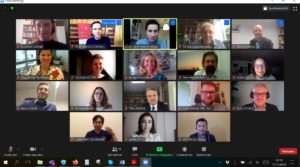
The Managing Global Governance (MGG) programme has launched a new knowledge cooperation initiative among partners from the MGG network on the external dimension of the European Green Deal. The initiative is implemented together with the Finnish Institute of International Affairs (FIIA) and the Konrad Adenauer Foundation (KAS) and brings together scholars from Brazil, China, Europe, India, Indonesia, Mexico, Russia and South Africa. It serves the purpose of examining and comparing perspectives on ‘green leadership’ and interests and (dis)agreements with regard to partner countries and the EU’s Green Deal. The cooperation kicked off with an online conference on 16 and 17 November to discuss, on the basis of input papers from all countries, the prospects for cooperation of the EU with (re)emerging powers. The conference also featured a policy dialogue with the European Commission represented by members of the cabinets working on international partnerships and the European Green Deal respectively.
The research is planned to culminate in a series of publications and a joint international conference in 2021.
New members of the leadership council are Silvie Kreibiehl (Chair, Germanwatch), Nils aus dem Moore (Head of Program Sustainability and Governance, RWI Institute), Sebastian Vollmer (Professor Development Economics, University Göttingen), Daniela Jacob (Chair, DKN Future Earth) und Marianne Beisheim (Senior Associate, SWP).
The co-chairs of SDSN Germany Anna-Katharina Hornidge (DIE) und Gesine Schwan (Humboldt-Viadrina Governance Platform) have been re-elected as members of the leadership council as well as Joachim Fetzer (DNWE), Mark Lawrence (IASS), Christa Liedtke (Wuppertal Institut), Hermann Lotze-Campen (PIK) and Sabine Nallinger (Stiftung 2°).
SDSN Germany is very thankful to the former members of the leadership council, Klaus Milke, Imme Scholz, Martin Visbeck, Christian Borgemeister und Oliver Wieck, for their strong commitment over the last years.
7th Assembly SDSN Germany
The 7th German SDSN Assembly entitled „Still on 2030 Course? Sustainable Development in the midst of Covid-19 and geopolitics“ took place on 23 November with more than 70 participants from politics and administration, academia, research and civil society. The assembly started with four breakout sessions: How can SDSN and other sustainability actors work together in the year of the federal elections 2021 to anchor sustainability policy as a central element in the social and political debates? How can we overcome the crisis in a more sustainable way with #NextGenerationEU? How do the different approaches around sustainable supply chains behave towards each other, and how can we cooperate on these issues in the future? What are the special opportunities and challenges for start-ups that want to successfully achieve their business goals while taking into account sustainable development?
Following the breakout sessions, the plenary sessions focused on two topics: The role of innovation and systemic logic as a compass for the way out of crisis and the question of a restart for international cooperation for sustainable development against the background of the recent US elections and the upcoming German G7 Presidency in 2022.
The final report of the assembly will follow shortly.
Neu begrüßt als Mitglieder im Lenkungsausschuss wurden Silvie Kreibiehl (Vorsitzende, Germanwatch), Nils aus dem Moore (Forschungsgruppenleiter Nachhaltigkeit und Governance, RWI – Leibniz-Institut für Wirtschaftsforschung), Sebastian Vollmer (Professor Entwicklungsökonomie, Universität Göttingen), Daniela Jacob (Vorsitzende, DKN Future Earth) und Marianne Beisheim (Senior Associate, SWP).
Bestätigt wurden die beiden Co-Vorsitzenden Anna-Katharina Hornidge (DIE) und Gesine Schwan (Humboldt-Viadrina Governance Platform) sowie Joachim Fetzer (DNWE), Mark Lawrence (IASS), Christa Liedtke (Wuppertal Institut), Hermann Lotze-Campen (PIK) und Sabine Nallinger (Stiftung 2°).
SDSN Germany dankt den ausgeschiedenen Mitgliedern des Lenkungsausschusses, Klaus Milke, Imme Scholz, Martin Visbeck, Christian Borgemeister und Oliver Wieck, für ihr großes Engagement über die letzten Jahre!
7. Versammlung SDSN Germany
Am 23. November fand die 7. Deutsche SDSN Versammlung unter dem Titel „Noch auf 2030-Kurs? Nachhaltige Entwicklung inmitten von Covid-19 und Geopolitik“ mit über 70 Teilnehmer*innen aus Politik und Ressorts, Wirtschaft, Wissenschaft und Zivilgesellschaft erstmals im virtuellen Format statt.
Die Versammlung begann mit vier parallelen Netzwerkstätten, die durch Impulse aus dem Netzwerk und darüber hinaus gestaltet wurden mit zentralen Fragestellungen zu nachhaltiger Entwicklung: Wie können SDSN und andere Nachhaltigkeitsakteure im Wahljahr 2021 zusammenwirken, um Nachhaltigkeitspolitik als zentrales Element in den gesellschaftlichen und politischen Debatten zu verankern? Wie können wir mit #NextGenerationEU nachhaltiger aus der Krise kommen? Wie verhalten sich die unterschiedlichen Ansätze rundum nachhaltige Lieferketten zueinander, und wie können wir zukünftig zu diesen Themen kooperieren? Wo liegen die besonderen Chancen und Herausforderungen für Startups, die ihre Unternehmensziele erfolgreich erreichen und gleichzeitig nachhaltige Entwicklung berücksichtigen möchten?
Im Anschluss an die Netzwerkstätten folgten Gesprächsrunden zu Innovation und systemischer Logik als Kompass für den Weg aus den Krisen sowie der Frage nach einem Neustart der internationalen Zusammenarbeit für nachhaltige Entwicklung mit Blick auf den Ausgang der US-Wahlen und dem deutschem G7-Vorsitz in 2022.
Der ausführliche Bericht zur Versammlung folgt in Kürze.
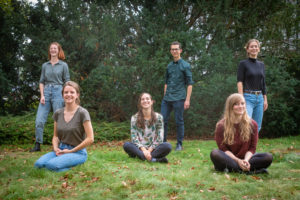
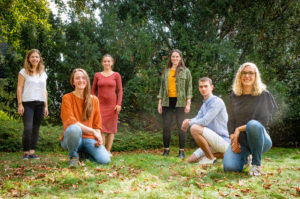
At the beginning of November, the participants of the Postgraduate Training Programme started into the research team phase. Divided into three teams of six participants each, the participants conduct intensive research on a specific topic. In the following, the teams report on their experiences during the first weeks.
Research Team I: “Reforming the UN Development System at the Country-Level: A New Collective Offer for the 2030 Agenda”
From the very second day of the Postgraduate Training Programme, things became serious for us participants: The waiting for the allocation of the research teams came to a long-awaited end! Research group 1 got to know each other on a warm September day in the institute garden excited to be working together for seven months. Even though the research would only start in November, two things were already clear: Firstly, the researchers should take a close look at the UN development system´s reform. Second, interviews would probably be conducted virtually. However, since we were still at a very early stage in the research process, we would select the UN organisations to be studied in a way that a short trip in 2021 would still be Corona compliant. Today, at the end of November, the situation has of course changed again… We have been in the preparatory phase for two weeks, as both research question and subject are taking shape. Fortunately, we do not yet have to switch completely to a digital everyday life, as we have enough space in the institute to comply with the hygiene rules in presence. Grateful to see masked faces in real life two or three times a week, it is easier to do research in this way than by virtual means. However, we have already made use of digital means to collaborate and were even able to successfully complete our team building virtually – probably as the first team in the history of the Postgraduate Training Programme. We will remain optimistic that despite COVID-19 we will be able to spend a short time abroad. To be continued…
Research Team II: “Societal Peace and Local Elections in Nepal”
Nepal – the country of the Hindu temples, with breathtaking landscapes and the Himalaya mountains in the background. Travelling this country once and at the same time pursuing an exciting research question should have been the highlight of our research phase. However, the current pandemic is causing quite a mess this year. Instead of field research on site, the motto is: exploring Nepalese culture from our home office in the metropolis of Bonn with an unstable internet connection. But long regrets are not known to help much. And so “let’s take it as it comes” is already our new motto. Who knows, maybe this slightly different variant and the new conditions will lead us to a completely different added value…? Of course, we still want to understand how the local elections affect social cohesion in Nepal. To this end, we will conduct qualitative online interviews with experts and, in close cooperation with a Nepalese survey institute, we will have quantitative telephone surveys of the population conducted. We are curious to see what opportunities and challenges will arise from the online research. In any case, we will not let the passion for the country, people and research be taken away from us. And if we get bored in our home office and the corona situation allows it, we simply take a culinary research team trip to Friesdorf, to our Nepalese restaurant of confidence. In this way, we try to bring a piece of Nepal to Bonn.
Research Team III: “Decarbonizing Cities: Assessing Governance Models for Transformative Change Towards Sustainability in European and Latin American Cities”
As the implementation of our initial research project on digitisation and the fiscal contract in Colombia faced major difficulties due to the pandemic, we decided to turn our attention to a completely different topic instead: sustainable cities. This topic is “completely different”, also in the sense that we are using the circumstances to rethink the research phase. Currently, most planning can only be done “on sight”. This presents us with challenges, but also opens up the possibility of developing our topic step by step, thereby making flexibility our virtue.
Topics such as decent housing conditions, participatory urban design, as well as safe and reliable mobility play a central role in our research. Fortunately, there are numerous successful initiatives and projects in this area. But how is this “success” actually measured? Which groups of actors are significantly involved? How evidence-based is this “success” and what do promising governance models look like? These are the questions we will be addressing in the coming months. Our research is affiliated to a larger project of the International Climate Initiative (IKI) of the German Federal Ministry for the Environment, Nature Conservation and Nuclear Safety (BMU), which is going to implement pilot projects on transformative change towards zero emissions in five Latin American cities, with DIE conducting the accompanying research. Sustainable urban development is a global field for which we do not have to fly to the Global South. European cities are also facing major challenges in this field. Therefore, we as a research team will take a multi-level perspective and look at global examples in order to deal with concrete case studies in Europe in a second step.
Bereits am zweiten Tag des Postgraduierten-Kurses wurde es für uns Teilnehmer*innen ernst: Das Warten auf die Einteilung in die Forschungsteams nahm ein lang ersehntes Ende! Forschungsteam 1 lernte sich in warmer Septemberatmosphäre im Institutsgarten mit Vorfreude auf sieben gemeinsame Monate kennen. Auch wenn die Forschung im November erst starten würde, standen bereits zwei Dinge fest: Erstens war klar, dass die Forschenden die Reform des UN-Entwicklungssystems unter die Lupe nehmen sollten. Zweitens, würden Interviews hierfür wahrscheinlich virtuell verlaufen. Da wir in der Themenfindung noch recht weit am Anfang standen, würden wir allerdings die zu untersuchenden UN-Organisationen so auswählen, dass sich eine kurze Reise 2021 doch noch Corona-konform gestalten ließe. Heute, Ende November, sieht die Lage natürlich wieder anders aus… Wir sind in der Vorbereitungsphase angekommen, die Forschungsfrage nimmt Form an. In einen digitalen Alltag müssen wir zum Glück nicht gänzlich wechseln, da wir im DIE genügend Platz haben, sodass wir die Hygieneregeln in Präsenz einhalten können. Dankbar dafür, maskierte Gesichter zwei-, dreimal pro Woche in Realität zu sehen, lässt sich die Forschung so einfacher als auf virtuellem Wege gestalten. Den digitalen Ansatz haben wir bereits genutzt und konnten unser Teambuilding – wohl als erstes Team in der Geschichte des Postgraduierten-Programms– virtuell erfolgreich abschließen. Es bleibt zu hoffen, dass wir einen kurzen Auslandsaufenthalt planen dürfen. Fortsetzung folgt…
Forschungsteam II: Societal Peace and Local Elections in Nepal
Nepal – das Land der hinduistischen Tempel, mit atemberaubenden Landschaften und dem Himalaya-Gebirge im Hintergrund. Einmal dieses Land zu bereisen und zugleich einer spannenden Forschungsfrage nachzugehen, das sollte der Höhepunkt unserer Forschungsphase werden. Doch die aktuelle Pandemie bringt dieses Jahr ganz schön durcheinander. Statt Feldforschung vor Ort heißt es: aus dem Homeoffice in der Metropole Bonn, im Internet die nepalesische Kultur erkunden. Doch langes Bedauern hilft bekanntlich wenig. Und so ist „let´s take it as it comes“ schon jetzt unser neues Motto. Wer weiß, vielleicht führt uns diese leicht andere Variante und die neuen Gegebenheiten zu einem ganz anderen Mehrwert…? Wir möchten nach wie vor verstehen, wie sich die lokalen Wahlen auf den sozialen Zusammenhalt in Nepal auswirken. Dazu werden wir qualitative Online-Interviews mit Expert*innen führen und in enger Kooperation mit einem nepalesischen Umfrageinstitut quantitative Telefonumfragen der Bevölkerung durchführen lassen. Wir sind gespannt, welche Chancen und Herausforderungen sich uns durch die Online-Forschung ergeben werden. Die Lust auf das Land, Menschen und Forschung lassen wir uns auf jeden Fall nicht nehmen. Und wenn es uns im Homeoffice zu langweilig wird und die Corona-Situation es zulässt, machen wir einfach einen kulinarischen Forschungsteam-Ausflug nach Friesdorf, in das nepalesische Restaurant unseres Vertrauens. So versuchen wir, uns ein Stück Nepal nach Bonn zu holen.
Forschungsteam III: „Decarbonizing Cities: Assessing Governance Models for Transformative Change Towards Sustainability in European and Latin American Cities”
Nachdem die Umsetzung unseres ursprünglichen Forschungsvorhabens zu Digitalisierung und dem Fiskalvertrag in Kolumbien durch die Pandemie vor großen Hürden stand, beschlossen wir uns stattdessen einem gänzlich anderen Thema zuzuwenden – der Nachhaltigkeit in Städten. „Gänzlich anders“ ist dieses Thema auch deshalb, weil wir die Gegebenheiten nutzen, die Forschungsphase neu zu denken. Aktuell kann in vielen Aspekten nur „auf Sicht” geplant werden. Das stellt uns vor Herausforderungen, eröffnet aber auch die Möglichkeit unser Thema schrittweise zu entwickeln und so Flexibilität zu unserer Tugend zu machen.
Themen wie menschenwürdige Wohnverhältnisse, partizipative Stadtgestaltung sowie sichere und zuverlässige Mobilität spielen in unserer Forschung eine zentrale Rolle. Erfreulicherweise gibt es hierzu bereits zahlreiche erfolgreiche Initiativen und Projekte. Doch wie misst sich dieser Erfolg eigentlich? Welche Akteursgruppen sind maßgeblich daran beteiligt? Wie evidenzbasiert ist dieser „Erfolg” und wie sehen erfolgsversprechende Governance-Modelle aus? Mit diesen Fragen werden wir uns in den kommenden Monaten beschäftigen. Damit gliedern wir uns an ein Vorhaben der Internationalen Klima-Initiative (IKI) des Bundesministerium für Umwelt, Naturschutz und nukleare Sicherheit (BMU) an, das transformativen Wandel hin zu CO2-Neutralität in fünf lateinamerikanischen Städten durchführt, wobei das DIE die Begleitforschung übernimmt. Nachhaltige Stadtentwicklung ist ein globales Feld wozu wir nicht erst in den Globalen Süden fliegen müssen. Auch europäische Städte stehen in diesem Bereich vor großen Herausforderungen. Daher werden wir als Forschungsteam eine Mehrebenen-Perspektive einnehmen und uns globale Beispiele anschauen, um uns im zweiten Schritt mit konkreten Fallbeispielen in Europa zu beschäftigen.
Diese Website benutzt Cookies. Wenn du die Website weiter nutzt, gehen wir von deinem Einverständnis aus.