

What can attending negotiations on biodiversity, land and climate tell us about the changing politics of global environmental governance? Reflections from Nairobi, Ulaanbaatar, Beijing and Shanghai. (mehr …)
What can attending negotiations on biodiversity, land and climate tell us about the changing politics of global environmental governance? Reflections from Nairobi, Ulaanbaatar, Beijing and Shanghai. (mehr …)
 Photo by Aris Sanjaya/CIFOR-ICRAF, www.cifor-icraf.org/event/cifor-icraf-at-unccd-cop16/
Oops, it’s happened again: after the CBD, an important negotiation process has now also failed in the UNCCD, known in Germany as the Desertification Convention – a multilateral agreement to combat the consequences of drought. (mehr …)

South African elections are but one event on a busy calendar in the global election years, where half the global populations goes to the polls – admittedly with varying degrees of actual voice in political matters. The country is among the bright ones, though, where votes clearly matter. The voters have turned a new page in politics at the Cape, setting a difficult task for a new government. (mehr …)

What could international cooperation look like that promotes economically, socially and environmentally sustainable development in the interests of the global common good? A few weeks ago, Andreas Freytag and Stefan Liebing argued here that modern cooperation with Africa had to be based on private-sector investment, market principles in project selection, and competition between partner countries for international investment. Paternalism in development policy should be replaced with principles of competition and the social market economy. (mehr …)
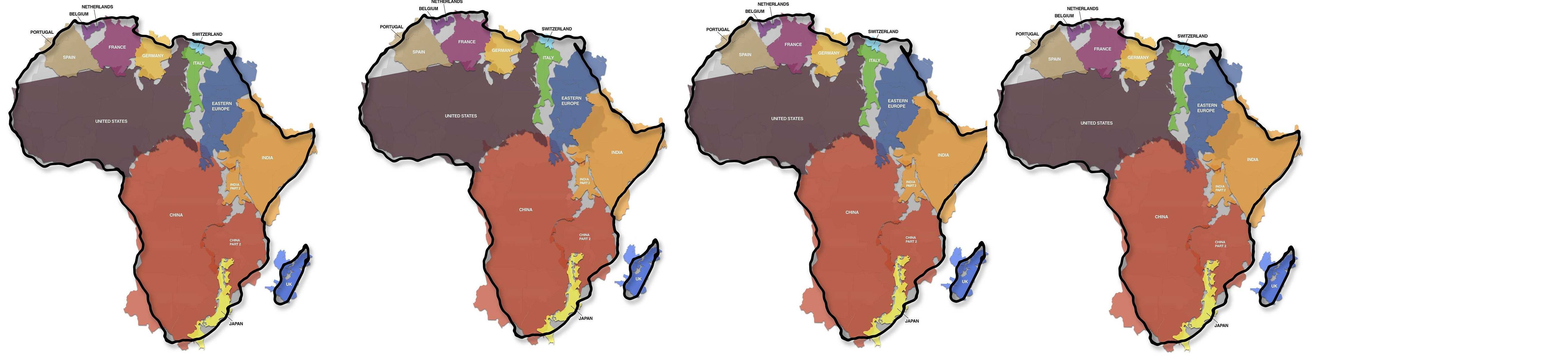 In recent years, a growing number of G20 nation states have used various forms of summit diplomacy to enhance engagement with the African continent through regular high-level meetings. These have been operationalised through initiatives such as the Forum on China-Africa Cooperation, India-Africa Forum Summit, Africa-EU Summit, the Korea-Africa Forum, the Turkey-Africa Partnership Summit, the United States-Africa Leaders Summit, and the Tokyo International Conference on African Development. Except for the summit with the EU, all of these initiatives are essentially putting together a single country with an entire continent. The partnerships span the parameters of both South-South and North-South cooperation, presenting opportunities for the African continent to diversify its international relations and cooperation.