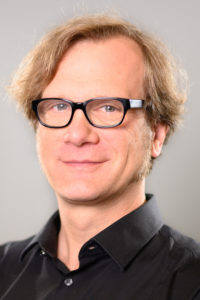
Julia Leininger, Leiterin des Programms „Transformation politischer (Un-)Ordnung“, wurde in die Projektkommission „Zukunft der Demokratie oder Ende des Diskurses“ des Ökumenischen Kirchentages 2021 (ÖKT 2021) berufen. Der ÖKT 2021 erwartet vom 12. bis 16. Mai 2021 in Frankfurt am Main ca. 100.000 Teilnehmer*innen, die gesellschaftspolitisch relevante Themen diskutieren.
On 17 April, Steffen Bauer, Head of the Klimalog project at the German Development Institute / Deutsches Institut für Entwicklungspolitik (DIE) presented a keynote on Covid-19 and the climate-development nexus at the first online meeting of the Bonn Climate Change Group.
Bauer stressed that the Covid-19 pandemic is symptomatic of a systemic global crisis. Accordingly, the Corona crisis as such manifests itself, first, as a public health emergency, secondly, as a driver of severe social and economic impacts, and thirdly, as an unprecedented stress test for public institutions at all levels from the local to the global. At the same time, it has a systemic quality that links the Covid-19 pandemic to sustainable development, the unfolding climate crisis and fundamental issues of global justice. Hence, Bauer argued that boosting the resilience of individuals, societies and economies to systemic crisis phenomena, including those caused by climate change, should be a common denominator for the emerging crisis recovery agenda and across all levels of governance.
He further argued that the 2030 Agenda and the Paris Agreement provide valid road maps to this end. They were not available to guide recovery at the time of the 2008 global financial crisis. Today, the situation is different. The severe economic disruptions we are facing due to Covid-19 should help rather than hinder policy adjustments and investments that pursue emissions reductions and a responsible use of natural resources, including biodiversity and ecosystems, and that spur the creation of decent, green jobs and stimulate economic growth.
The Bonn Climate Change Group is an open network of organisations and institutions based in Bonn, mostly working in the fields of environmental change and development. It has been jointly initiated by the NDC-Partnership and the City of Bonn in 2019 to foster dialogue on climate change and sustainable development and to open a space for mutual support towards ambitious climate action. Members range from the forestry sector to sustainable aviation, from development research to humanitarian aid, from UN agencies to grassroots organizations. The network meets 3-5 times a year, meetings are held in English and hosted in turns. The meeting on 17 April was organised by the City of Bonn, ICLEI – Local Governments for Sustainability, the Center for International Forestry Research (CIFOR) and the IRENA Innovation and Technology Centre (IITC).
Since April 2020, the Bonn International Center for Conversion (BICC), the German Development Institute / Deutsches Institut für Entwicklungspolitik (DIE) and the Wuppertal Institute have been working together with the project #17Ziele of Engagement Global within the framework of the Sustainable Development Solutions Network (SDSN) Germany.
The mission of the project #17Ziele is to raise awareness for the 2030 Agenda for Sustainable Development with the Global Sustainable Development Goals (SDGs) among the general public, especially among young people. The project, which is funded by the Federal Ministry for Economic Cooperation and Development (BMZ), provides easy-to-understand backgrounds on the sustainability goals and combines the themes of the 2030 Agenda with the everyday world of people – in leisure time, at work, online and offline.
Online, the community is mainly provided with tips for a sustainable everyday life and information on exciting projects and developments. Within the framework of the cooperation under the title „Network 17“, the three institutions contribute academic insights into the context and implementation of the SDGs. Among other things, the partners will regularly publish blog articles on the project’s website and report on their work on #17Ziele social media channels. Follow the project on Twitter, Instagram, Facebook and YouTube!
Seit April 2020 arbeiten das Bonn International Center for Conversion (BICC), das Deutsche Institut für Entwicklungspolitik (DIE) und das Wuppertal Institut im Rahmen des Sustainable Development Solutions Networks (SDSN) Germany mit dem Projekt #17Ziele von Engagement Global zusammen.
Aufgabe von #17Ziele ist es, die Agenda 2030 für Nachhaltige Entwicklung mit den globalen Zielen für nachhaltige Entwicklung (SDGs) in der breiten Öffentlichkeit, insbesondere bei jungen Menschen bekannter zu machen. Das Projekt, das vom Bundesministerium für wirtschaftliche Zusammenarbeit und Entwicklung (BMZ) finanziert wird, liefert leicht verständliche Hintergründe zu den Nachhaltigkeitszielen und verbindet die Themen der Agenda 2030 mit der Alltagswelt der Menschen – in der Freizeit, im Beruf, online und offline.
Online wird die Community dabei vor allem mit Tipps für einen nachhaltigen Alltag und Informationen zu spannenden Projekten und Entwicklungen versorgt. Im Rahmen der Kooperation unter dem Titel „Netzwerk 17“ steuern die drei Institutionen wissenschaftliche Erkenntnisse zu den Zusammenhängen und Umsetzungsfortschritten der Nachhaltigkeitsziele bei. Die Partner werden u.a. regelmäßig Blogartikel auf der Website des Projekts veröffentlichen und auf den Social Media-Kanälen von #17Ziele über ihre Arbeit berichten. Folgen Sie dem Projekt auf Twitter, Instagram, Facebook und YouTube!
With a global pandemic like COVID-19, there is an obvious need for policy makers to get experts‘ input to take decisions. The slogan used during the Brexit campaign that „people are tired of experts“ never sounded hollower than currently.
A pandemic is a very clear case for evidence as a basis for political decisions. Obviously, virologists are needed to address these questions and communicate what they know. This is a time with very vivid illustrations for the need for and the workings of evidence-informed policy making: We need evidence and experiences, from multiple perspectives and we need to put things into local contexts; and we certainly operate based on our value-systems.