Author: Sven Grimm

  • “Consolidate and sustain” under immense pressure – South Africa closes series of four ‘Southern’ G20 Presidencies

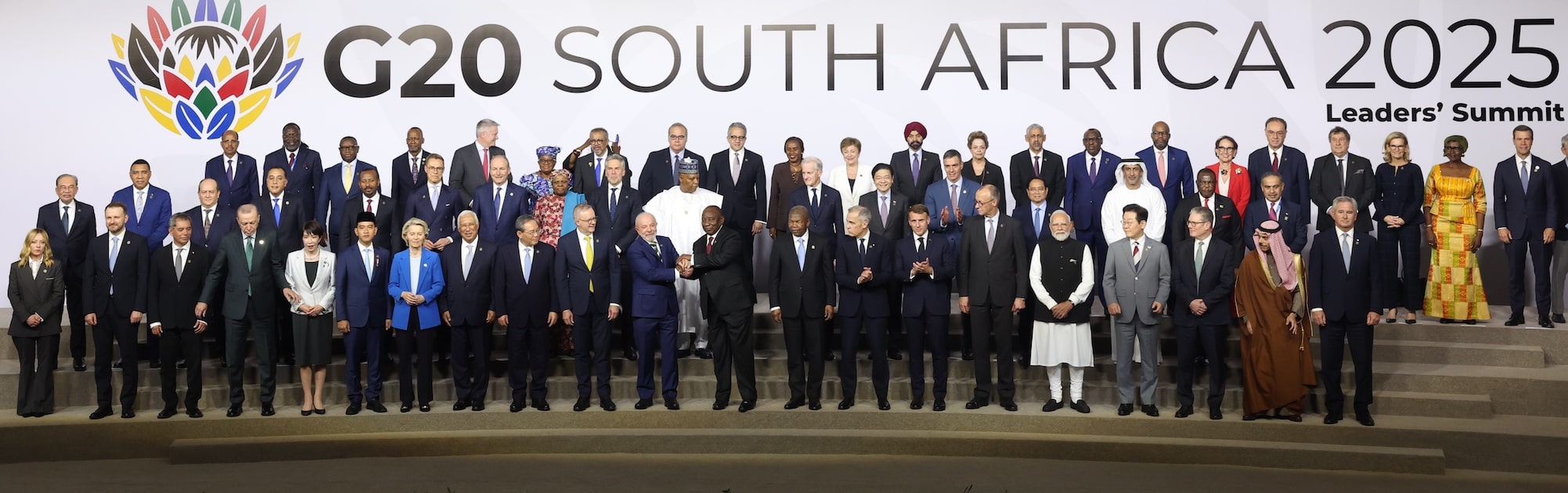
    Group photo of the delegates at the 2025 G20 Summit in South Africa.
    By UNCTAD on flickr

    Club governance formats were meant to work around blockages and challenges in the multilateral system. In a system under pressure, these have become more important. Simultaneously, they become embattled themselves in a political climate that has become more ruthless. Just after its presidence, South Africa has declared it would ”pause” its engagement in the G20 for 2026 after intense bullying by the US President. Yet, the existence of the G20 is based on the recognition that (financial) crisis of global scale require close cooperation among countries across the globe, going beyond the G7. That fact remains valid.

    The G20 is a collection of key countries that have to engage with each other – and that Europe has to engage with – to push for solutions for global challenges. Yet, polarisations are making G20 presidencies increasingly challenging. How did the last four “Southern” presidencies – Indonesia, India, Brazil and South Africa – navigate the increasingly choppy waters? And which elements can we distil from deliberations as communalities?

    G20 Presidencies 2022 to 2025: marked by crisis and decreasing trust in the international system

    Over the last four years, globalisation and global cooperation have taken various blows: We saw a struggling economic order, with vulnerable global value chains and aggravated national debt crisis in several low-income countries, as a repercussion of the COVID-19 pandemic. Further, the outbreaks and escalations of armed conflicts – not least so Russia’s full-scale invasion of Ukraine in 2022 – put the world order and its key principles under massive pressure. Since January 2025, with the second Trump administration, we also see aggressive tariff policies, withdrawal from multilateral engagements and further questioning the current order based on international law. Much trust has been lost in the international system and cooperation has become more complicated.

    Many international actors, for years, have been calling for fundamental reforms to the current global governance system, which was shaped after the Second World War and has not been updated to the current global setting. For instance, the international financial system makes it difficult for countries to consolidate their budgets when facing debt crisis. Questions persist whether the system is still fit for purpose. Consequently, systemic crisis shaped the G20 Presidencies between 2022 and 2025, who still aimed at communalities across presidencies.

    Indonesian, Indian, Brazilian, and South African leadership aspired to raise issues relevant to low and middle-income countries. Indonesia, despite Russia’s escalating war against Ukraine, kept the group intact and despite strong frictions facilitated a joint (!) G20 Leader’s Declaration. India managed the admission of the African Union (AU) to the G20 by 2023, making for a better representation of African countries– and thus lived up to a recommendation repeatedly brought forward by Think20 (T20) experts since 2017. Building on the AU’s inclusion, Brazil focused on representation of think tanks beyond G20 countries, especially from Africa, in 2024, and initiated the Global Alliance Against Hunger and Poverty. South Africa, as the first G20 Presidency “on African soil”, promoted “Solidarity, Equality, Sustainability” as this year’s G20 theme, in an attempt to set positive principles, countering crisis. South Africa’s leading think tanks for the T20 process chose the theme “consolidate and sustain”.

    The absence of several heads of state – among them those of China, Russia, and the US, with the latter continuing to challenge South Africa’s role based on false allegations – hampered the G20 Summit in Johannesburg. Yet, the G20 is more than a heads of state club as activities around it are also indicative of debates. The T20, for instance, comprises policy-oriented think tanks from across the globe – and provides evidence-based policy advice.

    T20 – think tanks and proposals to reform global institutions

    With the four consecutive “Southern” presidencies, “Southern” think tanks led the T20, too. In the communiqués that condense the work of each T20 process, recommendations throughout all four processes call for the leaders of the G20 to ensure and enhance cooperation on reforms of (1) global governance structures and (2) the multilateral trading system.

    1. Modernising the international order 

    Published in the direct aftermath of COVID-19, the Indonesian T20 Communiqué called for a general modernisation of the international order to account for the interests of developing countries, and to be able to address “global problems as climate change and future pandemics”. The Indian T20 process specified this call suggesting the establishment of an expert group by the G20 to develop concrete proposals for global governance reform, a “roadmap for ‘Multilateralism 2.0’”.

    The recommendation, inter alia (and not surprisingly), explicitly refers to a reform of the UN Security Council, which experts in the Brazilian T20 process took up. Both countries have ambitions for a permanent seat at that table. Building on the recommendation of establishing an expert group, the Brazilian T20 Communiqué formulates the idea of establishing a permanent task force on UN reform within the G20 Sherpa Track.

    1. Ensure cooperation in the multilateral financial and trading system 

    The general call for more representation for low- and middle -income countries goes along with specific recommendations for the reform of multilateral procedures at the IMF and WTO. The Indonesian T20 Communiqué called for a “new Bretton Woods”. The recommendations especially highlight the importance of a change in the quotas of IMF special drawing rights (SDR) in favour ofl ow-income countries, who are currently only allocated 3.2% of the USD 650 billion that the IMF allocated in total in SDR in 2021. Underlining the call for a reform of the IMF quota system, the Brazilian T20 process also published an Implementation Roadmap to reform the G20 Common Framework for Debt Relief that links its outcome to the recent G20 Leaders’ Summit of South Africa.

    Recommendations to reform the multilateral trading system and the international financial architecture formulated in the T20 processes under the Indonesian, Indian, Brazilian and South African G20 Presidencies call for structural adjustments to develop more fair and cooperative processes. India, for instance, proposed that the G20 “tasks” the WTO with coordinating an agreement to reform trade rules, with G20 meetings as regular reporting occasions. The High-Level Recommendations published during the South Africa T20 Midterm Conference recommends strengthening the WTO secretariat. These calls can be read as commitments to existing multilateral institutions and processes.

    Urgency in building on policy proposals

    The four T20 processes under the G20 Presidencies between 2022 and 2025 reaffirmed that reforms are needed in the multilateral system. Questions remain about rising powers’ increasing global responsibilities, and how they are exercised, e.g. with regard to G20 countries’ role in the international financial system. Recommendations by experts from leading research organisations consider it crucial to make the multilateral global governance system fairer and more fit to address global challenges.

    The G20 South Africa Leaders’ Declaration, adopted at the Johannesburg Summit on 22 and 23 November, makes reference to enhancing the international financial architecture as well as to the reform process of the United Nations, UN80. The text also refers to the G20 Call to Action on Global Governance Reform, adopted under the Brazilian G20 Presidency in 2024. The absence of the US government as next chair of the G20 in 2026 at the Summit in Johannesburg leaves little room for optimism that further steps will be taken in these areas in the coming year. And yet, Europe would be wise to continue engaging on the substance elaborated in the T20 process.

    The G20 will become more difficult, if not dysfunctional in 2026. From a European perspective, it is all the more important to keep in dialoge with so-called “rising global powers”, and particularly seek partnership of the middle-powers. Building and expanding these alliances is in Europe’s vital interest. Consequently, European actors should actively take up reform proposals that are already on the table. In this line of thinking, it is obviously unwise to exclude African representation from the next G20 meeting, be that South Africa or the often-ignored African Union. Engaging for a legitimate international order is in Europe’s crucial interest in an increasingly multipolar global setting.

  • Science as early casualty in the authoritarian turn

    Photo of the Johns Hopkins University in Baltimore with dark clouds in heaven.

    At flabbergasting speed, we currently see a very unappetising authoritarian turn in the United States under President Donald Trump. Numerous executive orders, often on questionable legal basis, target international cooperation and funding for academia, which, in the mind of “strongmen”, merit little attention, anyways. (mehr …)

  • Election year 2024 – South Africa rocks its political realities

    Image: Flag of South Africa, a hand in the same colors form the "V"-Victory-Sign
    Der Login im Boomerang Casino ist schnell und unkompliziert, sodass Spieler sofort auf eine Vielzahl von Spielen und Funktionen zugreifen können. Um sich einzuloggen, geben Sie einfach Ihre registrierte E-Mail-Adresse und das Passwort in das entsprechende Feld auf der Startseite ein. Neue Spieler können sich in wenigen Minuten registrieren und von großzügigen Willkommensboni profitieren. Nach dem Login haben Sie Zugang zu einer breiten Auswahl an Spielen, darunter Slots, Tischspiele und Live-Casino-Optionen. Boomerang Casino von boomerang-casino.com.de legt großen Wert auf Sicherheit, indem es moderne Verschlüsselungstechnologien verwendet, um die persönlichen Daten und Transaktionen der Spieler zu schützen.
    LordLucky ist ein beliebtes Online-Casino, das eine große Auswahl an Spielen und eine benutzerfreundliche Plattform bietet. Mit einer beeindruckenden Sammlung von Slots, Tischspielen wie Blackjack und Roulette sowie einem spannenden Live-Casino zieht LordLucky Spieler aus aller Welt an. Neue Spieler können von attraktiven Willkommensboni profitieren, die den Einstieg erleichtern. Die https://lordlucky.org zeichnet sich durch ihre einfache Navigation und sichere Zahlungsoptionen aus, sodass Ein- und Auszahlungen problemlos abgewickelt werden können. Zudem legt LordLucky großen Wert auf verantwortungsvolles Spielen und bietet Unterstützung für Spieler, die ihr Spielverhalten kontrollieren möchten.

    South African elections are but one event on a busy calendar in the global election years, where half the global populations goes to the polls – admittedly with varying degrees of actual voice in political matters. The country is among the bright ones, though, where votes clearly matter. The voters have turned a new page in politics at the Cape, setting a difficult task for a new government. (mehr …)
  • The BRICS bang! – Signals from BRICS enlargement to South, West and North

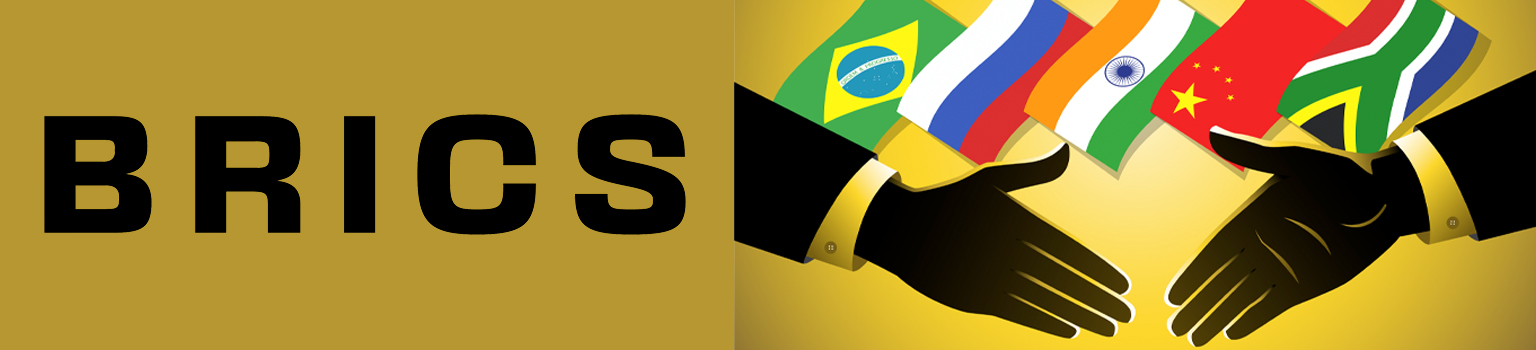
    The BRICS group – Brazil, Russia, India, China and South Africa – invite six countries to join them for a BRICS+. The final list of invitees is an odd bunch: Saudi Arabia, the United Arab Emirates (UAE) and Iran from the Middle East, Argentina from Latin America and Egypt and Ethiopia from Africa, with the former also being an Arab state. This decision on specific members came after apparently tough discussions amongst current membership, as interests varied widely. Yet, the return of geopolitics seems to have revitalised a disparate group. Why (only) these six, what are likely effects on international relations, and who’s benefitting most?

    (mehr …)

  • Zeitenwende – Investing in competencies for transnational cooperation

    Zeitenwende – Investing in competencies for transnational cooperation

    Photo: View from a sailboat, We cannot assume that “we are all in the same boat”, even though we are all facing the same storm.

    Russia’s attack on Ukraine has put into sometimes sharp relief the different perspectives of inter- and transnational cooperation. The violation of the rules-based order after WWII caused shockwaves, specifically in Europe. Experiences of partners in, say, Africa or Asia with this international order historically differ from the European ones; consequently, even if we might share values, perspectives differ. While inter- and transnational cooperation is more needed than ever, cooperation takes place across deepened ideological rifts and conflicting material interests. This is a politically more complex world.

    We thus need better structures for transnational knowledge cooperation and individuals who have the skills to navigate unchartered and sometimes choppy waters and address tensions in these difficult times. Training of actors is thus crucial, as a “Zeitenwende” is characterised by the absence of “business as usual”. Consequently, building and strengthening competencies of staff (and partners) to enable them to (re)act to and shape new and challenging situations matters largely for transnational cooperation.

    Global challenges require global and transnational perspectives

    Cooperation across borders is a precondition and basis for shaping solutions. Working on, say, climate change needs to combine knowledge (in the widest sense) from Europe, North America, China, India or Brazil as well as the participation of partners from most affected regions – Africa, South and Southeast Asia, the Pacific and the Arctic. The same logic applies for other crucial elements for societies’ progress, if not survival: international knowledge cooperation is needed in order to understand, analyse, research global challenges systemically and from different perspectives.

    Cooperation takes place in a context. In order to be effective and policy-relevant, research will have to include actors beyond academia and think tanks – and engage in transdisciplinary work, co-shaping research agendas. At the same time, work on global solutions directed towards the global common good needs to be based on evidence rather than self-interest and ideology. We thus have to consider power asymmetries, globally and nationally.

    Globally, agenda-setting powers differ – and are undergoing changes. Traditionally grants mostly were funded “from the North”, coming with its own challenges, as this was (and still is) substantially impacting on research agendas in regions in need of funding. The North-South divide is an almost tangible narrative. At the same time, Europe is no longer the only show in town: the attraction of alternative actors increases, and their abilities have substantially increased over the last years, too. A decoupling into groups or friends and foes is certainly not a desirable scenario. We cannot simply accept the establishment of “political camps”, but need exchanges across North-South divides, as we need to cooperate for shared understandings and contribute to the global common good. As an illustration: the like-minded G7 needs to build bridges to other actors, not least so in the context of a more “southernized” G20.

    Furthermore, national power settings matter for cooperation. Think tanks in authoritarian settings have limited range of manoeuvre. While they do play an important role in providing technical expertise and helping to explain “the outside world’s discussions” to decision-makers, experts might not be able to express their points publicly or outright. Their tasks also include the “projection of the official (inside) view” to the outside. Consequently, cooperation, as much as it is needed, is thus not without tensions, both institutionally and from an individual’s perspective.  Bridges into difficult contexts are needed, and not least think tanks enable bridge-building, through dialogue and training activities.

    Different sets of skills and competencies are required to navigate the more complex, multipolar world.

    Training competencies for global cooperation – shifting emphasis

    Training for professionals in global cooperation has to prepare early career participants for not only operating under these tensions, but to actively contribute to reducing them. First and foremost, tackling situations of high complexity and uncertainty under conditions of fragmentation demands a cooperative approach.

    Training programmes need to go far beyond simply teaching “known facts” (and the question, what constitutes facts is an additional dimension for exchanges, anyhow). Knowledge is certainly necessary, i.e. the cognitive dimension of having information about facts, theories, procedures and being able to analyse and apply this information. Yet, competencies are much more. Based on knowledge, they include skills and attitudes. Skills are the ability to do something in practice such as applying a certain technique and using the appropriate tools in a given situation. And attitudes mean feelings and belief systems: in which way do we approach situations? Are we open-minded, risk-averse or experimental?

    Cooperation competency is essential for overcoming fragmentation. It is required in order to reach a deeper understanding of different perspectives, thereby laying the ground for a joint analysis of problems and the creation of sustainable solutions. Key elements that nurture cooperation include skills such as active listening or being able to express own ideas and opinions in a clear and non-offensive way. Furthermore, communication competency is based on attitudes such as a learner’s mindset, believing that every perspective is important. In order to address and potentially overcome tensions, conflict management competencies are required, meaning a mix of self-awareness of own emotions (and what triggers them), the ability to manage emotional responses and to change perspectives by listening to differing opinions. Reflexivity is closely connected and refers to the ability to reflect on behaviour and values as well as the readiness to deconstruct established patterns of thinking and acting.

    Exploring joint solutions in a more polarised, more uncertain world, however, also requires normative competencies in cooperative actors. Values are the ground we stand on in our positioning. Actors need to be aware of own values, to be able to express them and to identify and honestly discuss inconsistencies and tensions, be it within own value systems or with regards to partners’ values.  Particularly in difficult times and in spaces where actors from different contexts with potentially contentious perspectives interact, it is important to be able to engage in an open dialogue with each other. In the very least, lines of cooperation need to be maintained.

    Zeitenwende: transformative competencies needed

    And yet, in times of multiple fundamental crises and high urgency – a Zeitenwende – cooperation has to reach a different level altogether. It has to leave behind the policy paradigm of incremental adjustments in and optimisation of globalisation; cooperation needs to reach transformative quality. This is obviously also posing particular challenges to training.

    We need to nurture creativity, an openness and willingness to explore new fields and to identify new ways of doing things in order to overcome business as usual. Actors need to sharpen their ability to take into account the interlinkages, side- and ripple effects of actions, drawing upon evidence. In brief: they need to analyse complex systems in a holistic way.  Closely connected to this, training programmes need to strengthen anticipatory thinking as the capacity to create visions of a desired future, as well as the ability to strategically develop pathways of change towards this desired future by seizing windows of opportunity, designing interventions, building alliances for change.

    In a nutshell: We cannot assume that “we are all in the same boat”, even though we are all facing the same storm. Yet, in order to weather the storm, we need to strengthen our innovative and creative abilities – jointly, wherever possible.