
Pilot cities in Argentina, Brazil and Mexico show measurable climate impacts and improved quality of life.
Since 2021, IDOS has been working on a multi-partner project “Transformative Urban Coalitions” (TUC)” aimed at the sustainable transformation of disadvantaged urban neighbourhoods and cities in Latin America. The final planning meeting took place in Buenos Aires from 20 to 24 April, as the project ends in 2026. Together with the Institute for Environment and Human Security at the United Nations University (UNU-EHS), the World Resources Institute (WRI) and the International Institute for Environment and Development (IIED), as well as representatives from the five pilot cities in Argentina, Brazil and Mexico, activities were planned to ensure the sustainability of the measures.
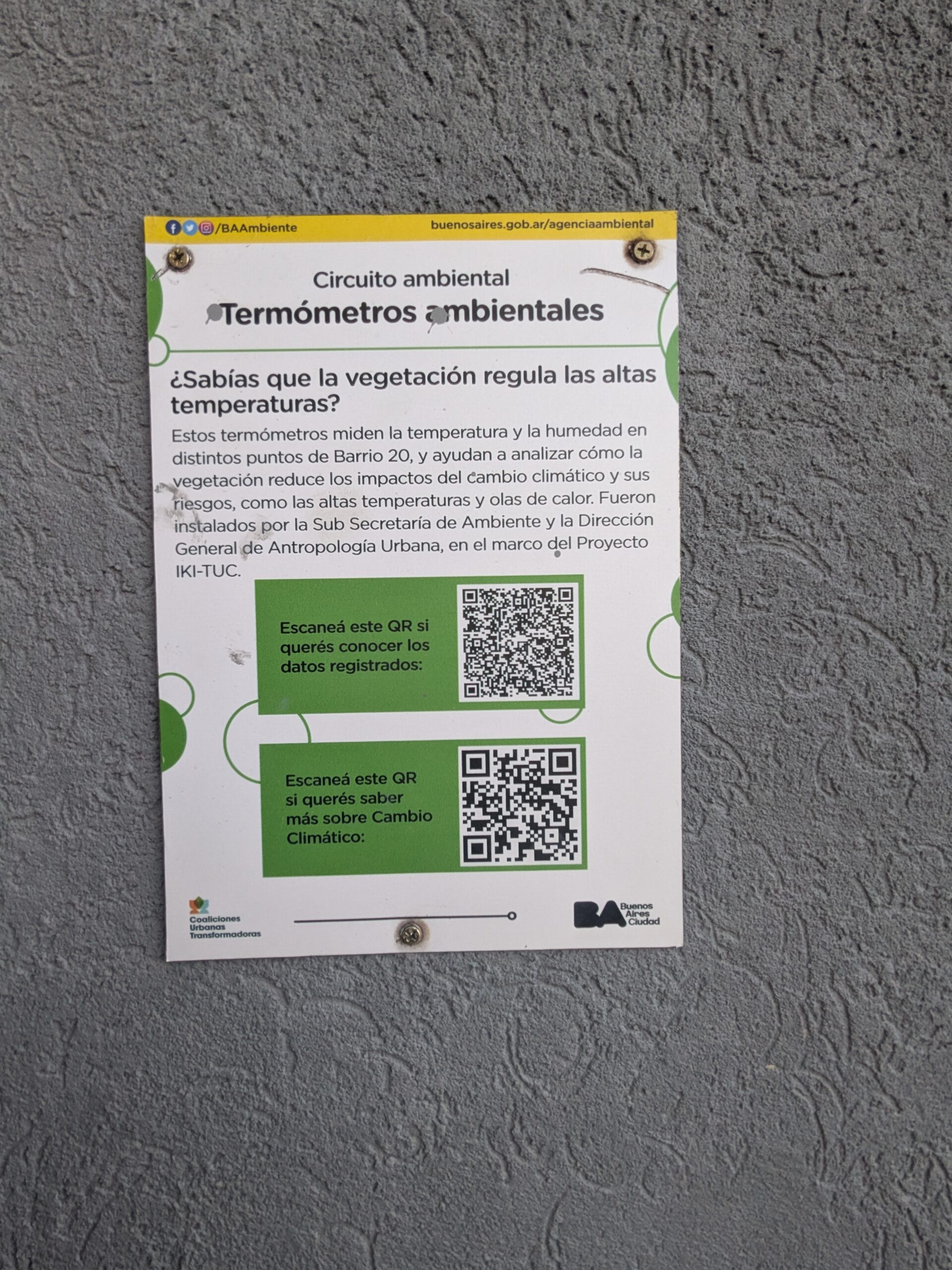
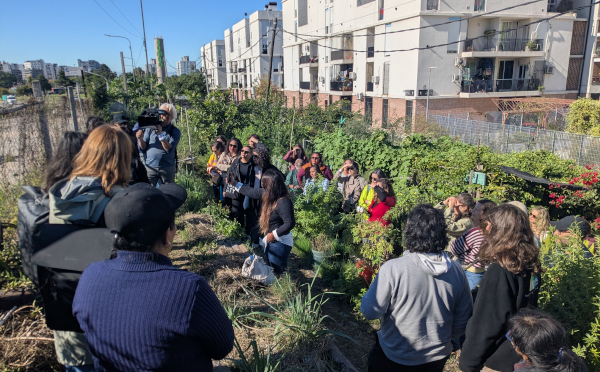
Following the establishment of “Urban Labs” and the implementation of local transformation projects in the pilot cities, the second phase of the project, which began in 2024, focused on feeding the findings into science and policy, as well as scaling up the approach. In Argentina, the project team visited the Barrio 20 district in Buenos Aires, where residents have implemented numerous measures such as urban gardens, green facades and shading provided by climbing plants. Studies based on locally installed climate monitoring stations show that this has significantly reduced maximum temperatures in the narrow streets and improved air quality and quality of life. Inspired by these successes, disadvantaged neighbourhoods in Argentina’s third-largest city, Rosario, have also adopted this approach. The city administration invited the TUC project team to have a look at the progress they have made and engage with residents. In Rosario, too, the measures have reduced climate impacts and improved quality of life. In both cities, coalitions now exist comprising citizens, neighbourhood organisations and city administrations, which are further expanding climate-friendly adaptations and promoting them in other cities as well as at the political level.
In addition to Argentina, the project has also helped to inspire the national programme “Periferia Viva” in Brazil which supports 58 cities with around 900 million Euros since 2025. In the remaining months, the local project teams will continue to hand over project measures to local coalitions. In addition, the data collected over six years on the transformation processes in the five pilot cities will be analysed and published in academic and policy-oriented formats.

Schreibe einen Kommentar