
Climate injustice as a growing global challenge calls for stronger cooperation, innovative financing, and local action.
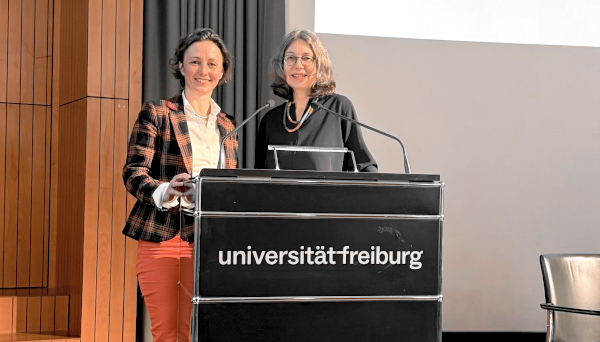
On 23 April, the Catholic Academy Freiburg, the Heinrich Böll Foundation Baden-Württemberg, the Colloquium politicum of University of Freiburg and the Climate Neutrality Foundation hosted the event “Why climate justice is a question of the future for everyone”, as part of their series of events reflecting on the state of climate cooperation policy 10 years after the Paris Agreement.
IDOS Director Prof. Anna-Katharina Hornidge was invited to give a keynote for the event, in which she reflected on global challenges and local solutions for climate injustice. Climate injustice today occurs in a context of increasing polarisation and autocratisation and rupture of the international order – effects which exacerbate one another, making tackling them both more urgent as well as more difficult.
Professor Hornidge emphasised the importance of cities as local change agents, strengthening climate and environmental policies as security policy, and building cooperation architectures with middle powers addressing climate change and its unfairly distributed effects. Professor Hornidge’s keynote succeeded a keynote by Dr Imme Scholz (Co-President of the Heinrich Böll Foundation) and was followed by panel discussions.
IDOS finance expert Dr Yabibal Walle contributed by reflecting on different financing mechanisms and instruments out of an international justice perspective. Shaping a sustainable and peace-promoting future requires the dismantling of power imbalances that have developed over time—both internationally and across generations. Climate justice is a prime example of this.

Schreibe einen Kommentar