
The discussion focused on the BMZ’s reform plan “Shaping the future together globally,” which outlines a strategic reorientation of German development policy.
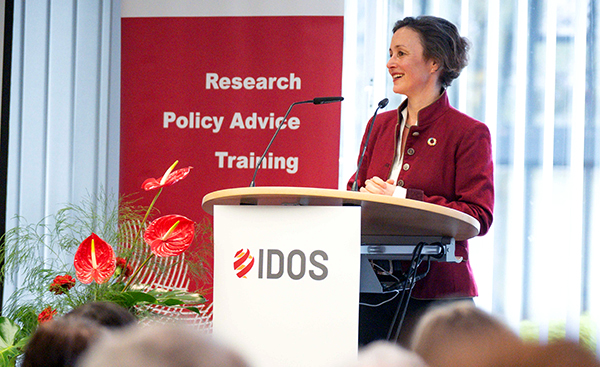
On 13 March, we welcomed Reem Alabali Radovan, Federal Minister for Economic Cooperation and Development (BMZ) for a speech and a high-level dialogue with representatives from Bonn’s development policy and cooperation institutions, including UN organisations, other federal ministries, the city of Bonn, academia, civil society, the arts, media, think tanks and research institutions.
In her opening remarks, Minister Alabali Radovan mentioned the importance of Germany investing in reliable, trust-based, and reciprocal partnerships with countries across Asia, Africa, and Latin American an increasingly fragmented, multipolar world and highlighted IDOS as a key partner providing expertise.
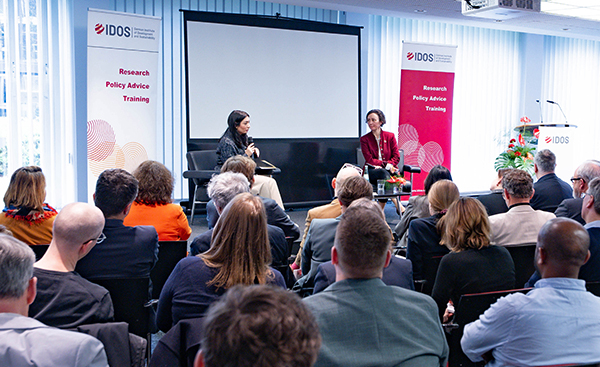
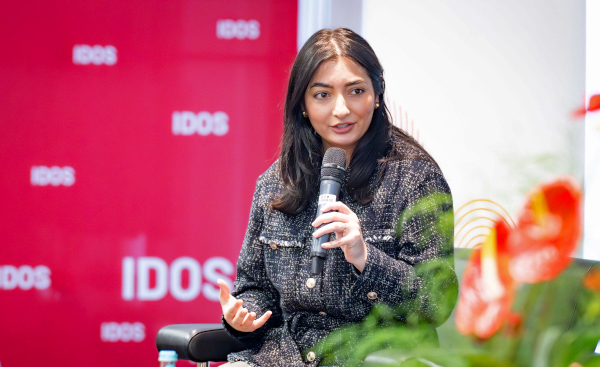
In the panel discussion with IDOS Director Prof. Anna-Katharina Hornidge, Minister Alabali Radovan urged the participating decision-makers for sustained political support for international cooperation and development and underlined the need and potential to mobilise private capital additional to public funds for building transnational alliances. Referring to shrinking civic and epistemic spaces due to the rise of authoritarian forces, she reaffirmed her clear commitment to safeguarding the independence and freedom of the media and academia, as well as to supporting an active and empowered civil society. At the same time she underlined the need for a mid- to long-term approach to fighting poverty, ensuring food security, and fostering social cohesion and stability especially also in conflict-affected regions. Turning to cooperation formats with middle income economies she focused on economic cooperation in mutual interest, here outlining a range of different cooperation formats including loan-based economic cooperation, as well as increased dialogue and think tank formats. The discussion also emphasised improving public communication on the effectiveness of development policy, especially also beyond the ‘development bubble’.
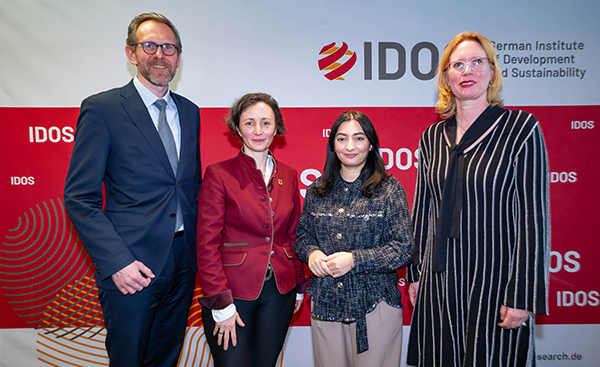
The minister also emphasised the contribution by IDOS through research, scientific evidence and subject-focused policy advice to the careful design of reform discussions in international cooperation and development. In an additional video statement, the Minister particularly mentioned IDOS’ analyses of investment opportuniti es in middle income economies to foster sustainable development and job creation. She highlighted Germany’s aim to pursue a strategic, impact-oriented development.

Schreibe einen Kommentar