
The MSC 2026 highlights shifting power dynamics, new priorities and the renegotiation of international order.
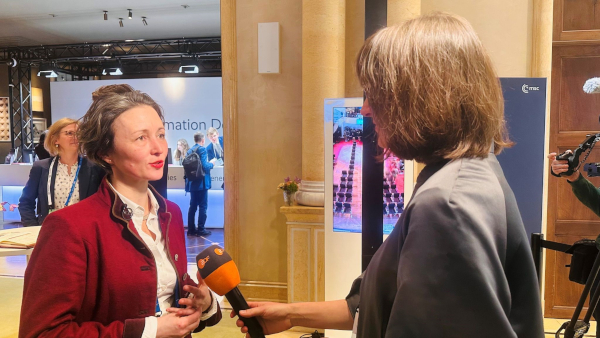
The current world order is “under destruction”. This message was echoed throughout this year’s Munich Security Conference, a conference that however felt markedly different from previous years. The transatlantic irritations of 2025 have been politically processed. Attention is moving on from grappling with changed realities to a re-positioning and re-shaping of the newly emerging order. Germany and Europe are positioning themselves more actively in the debate around a more autonomous security and cooperation architecture. Multipolarity has been accepted as a structural reality — alongside an ongoing search for a viable multilateralism within it. IDOS was represented at this year’s MSC by IDOS Director Prof. Anna-Katharina Hornidge and PD Dr. Julia Leininger, Head of Department Transformation of Political (Dis-)Order and contributed research-based insights to its central debates through multiple channels.
Ahead of the conference, IDOS researchers PD Dr. Stephan Klingebiel and Dr Tim Hailer-Röthel cooperated with the MSC to provide data on official development assistance (ODA), with two graphics being included in the MSC official report. An IDOS policy brief by Dr Charlotte Fiedler, Dr Jasmin Lorch, Dr Karina Mross and PD Dr. Julia Leininger shows: Development cooperation has a conflict-reducing effect — but only under clear conditions, including the prioritization of peace and democracy promotion, systematic context analyses, the Do-No-Harm principle, and the avoidance of abrupt exit shocks. Before travelling to Munich, Anna-Katharina Hornidge emphasised the strategic importance for civilian means for integrated security. With an IDOS animated video series elaborating on the role of social cohesion.
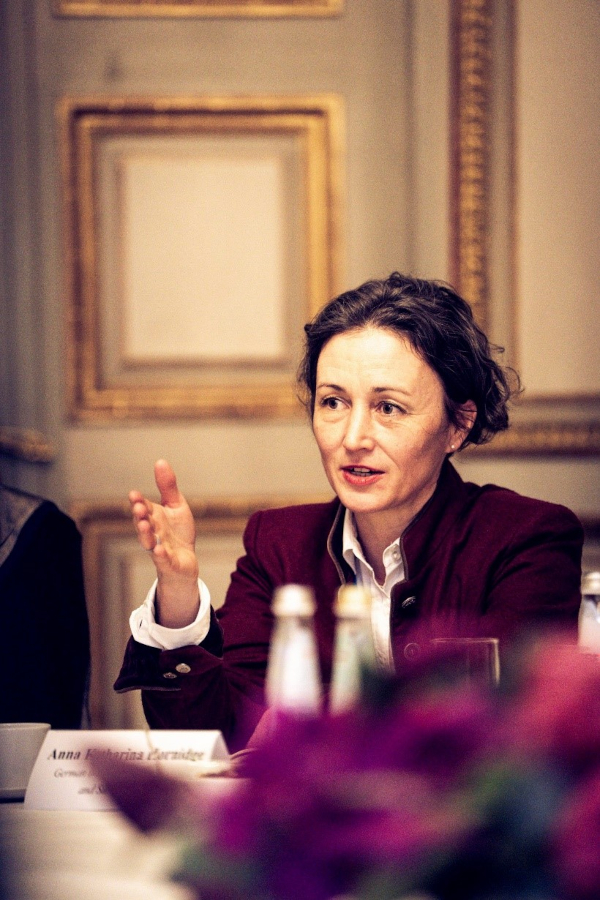
A core theme of IDOS’ contributions to this year’s MSC was the question of how „values-based realism“ or „principled pragmatism“ can be given concrete shape under shifting power relations. The closed breakfast dialogue “Values that Hold: Toward a Pragmatic Security Order” IDOS co-hosted with the Konrad-Adenauer Foundation sought to identify which core norms remain viable under multipolar conditions and how they can be anchored politically with consistency. The informal high-level session pointed towards a need for clarity about values that bind alliances, fundamentals of international law that remain binding, and about the interrelation between domestic priorities and foreign policy commitments.
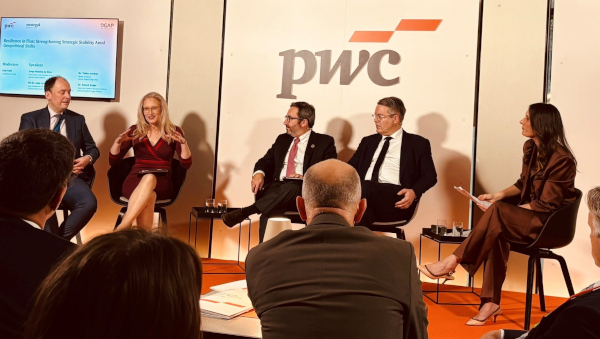
Beyond this IDOS co-hosted dialogue, Anna-Katharina Hornidge and Julia Leininger made contributions to various further sessions at the MSC, held by national and international partners. This included for example participation by Anna-Katharina Hornidge at a roundtable on Science Diplomacy hosted by Helmholtz-Gemeinschaft, DAAD, and the Federal Foreign Ministry, where she added to the discussions on research security and the role of independent science for democracy, as well as contributions to a side-event by GIZ on inter-regional cooperation to combat transnational organized crime. Among further contributions, Julia Leininger discussed the role of resilience for security, defense and peace policy as a speaker on a panel hosted by PriceWaterhouse Cooper. In her IDOS column, she further positions the ubiquitous concept of resilience within a security-policy framework.
IDOS researchers added further to public and policy-debate around the MSC. Dr Semuhi Sinanoglu in his op-ed for Table.Media further analyses the evolving and key role of middle powers for building viable cooperation architectures characterised by both principle and pragmatism and Dr Jasmin Lorch points out the significance of sovereignty and ius cogens for the positioning of Europe and middle powers.
Anna-Katharina Hornidge and Julia Leininger shared their reflections on the MSC: In conversation with ZDF NANO, Anna-Katharina Hornidge pointed out the importance of alliances with middle powers in Africa, Asia, and Latin America and she discussed the reaction to the open advertising of an antipluralist vision put forth by the US in her article on Table.Media. In her article for Frankfurter Rundschau, Julia Leininger argues that the international order must in future be more flexible, more strongly tied back to domestic politics, and more societally legitimate.
What the MSC 2026 made clear is that the phase of strategic disorientation is giving way to one of hard choices. The architecture of international order is being renegotiated — and the question is not whether values have a place in that negotiation, but how to define and defend them politically and pragmatically. IDOS will continue to contribute research and analysis to that debate.

Schreibe einen Kommentar