
At the invitation of the German Federal Foreign Office, international journalists travelled across Germany. IDOS was delighted to welcome them as part of their tour.
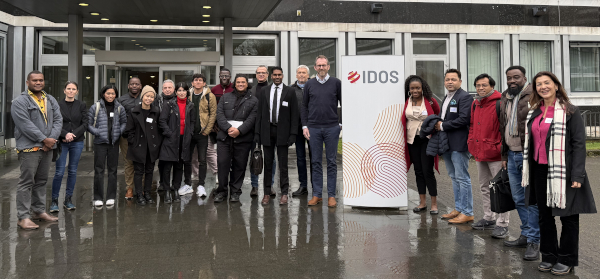 On behalf of the German Federal Foreign Office, the visitor programme of the Goethe-Institut organised an information tour on the theme “Nexus – Climate, Peace, Security”. Fifteen journalists from South America, Africa and Small Island Developing States (SIDS) in the Caribbean and Pacific took part. Their stay in Germany from 8 to 14 February aimed to encourage discussion about the international security challenges arising from human-induced climate change. The programme also sought to highlight Germany’s commitment, resources and conviction in its international engagements, presenting it as a reliable and dedicated candidate for the UN Security Council.
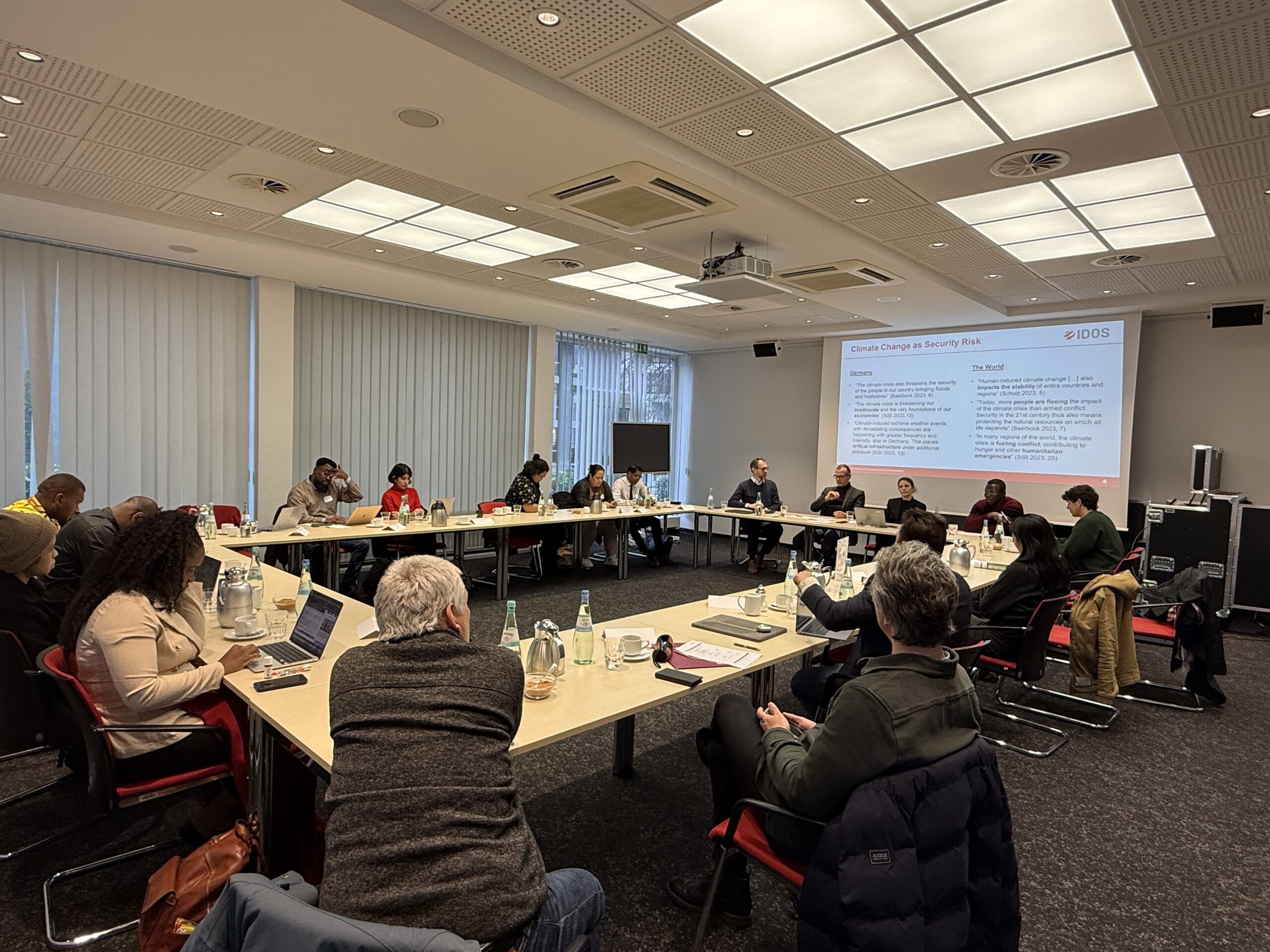
The journey took the group to several key institutions working at the intersection of climate and security. On 13 February, they visited the German Institute of Development and Sustainability (IDOS). The institute’s Deputy Director (interim), Dr Axel Berger, began the visit by providing an overview of IDOS‘ work. What followed was both substantive and rich in perspectives. Two experts introduced the guests to the complex landscape of climate risks.
Dr Steffen Bauer gave an input on “Climate change as a global risk for international security and human development”. He illustrated how the international perception of climate change has changed over the past twenty years from an environmental problem to an issue that pervades virtually all sectors of development policy. The corresponding „securitisation“ of climate policy is particularly palpable in its interaction with current geopolitical dynamics, for instance regarding access to critical raw materials required for clean technologies or in land-use conflicts.
Dr Jasmin Lorch then gave a presentation titled “Climate Risks and Integrated Security: Climate Change in German Policy”, in which she explained the importance attached to climate risks in the German government’s 2023 National Security Strategy (SiSt). The presentation contextualised the “integrated understanding of security” underlying the SiSt in the development of the security concept after the Cold War. The presentation concluded with an outlook on possible future developments in the German and European understanding of security in times of increasing great power politics and a growing focus on military defence.
A lively exchange followed. It was open and nuanced, and shaped by the journalists’ own research experiences. The dialogue was characterised by mutual learning. For IDOS, such international exchanges are highly valuable in providing context for ongoing research and policy advice.

Schreibe einen Kommentar