The process prepares for COP17 in August 2026 and involves IDOS researcher Dr Michael Brüntrup in the work.
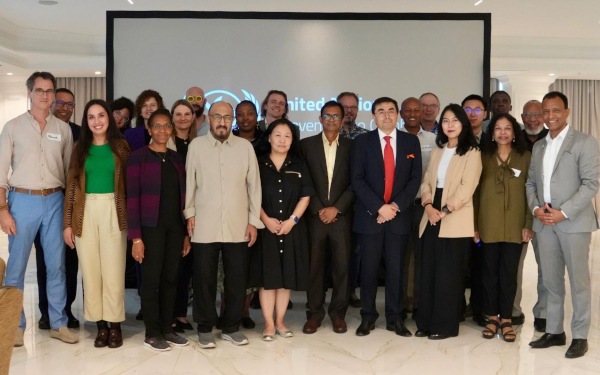
The Tafa’ul process is designed to prepare the drought negotiations of the 17th Conference of the Parties (COP) of the Desert Convention (UNCCD) and to build trust among the parties. After the 16th Conference of the Parties (COP) to the United Nations Convention to Combat Desertification in Those Countries Experiencing Serious Drought and/or Desertification, Particularly in Africa (short UNCCD), no agreement was reached on an ambitious agreement on drought.
The continuation of negotiations was merely postponed until the next COP, whereby creating a vacuum in the preparation of these negotiations. This threatened to repeat the stalemate and sideline the issue of drought, which is of great importance to African members in particular. To counteract this, the Saudi Arabian Presidency, together with the UNCCD Secretariat, initiated an informal process called Tafa’ul, which translates as “constructive optimism and hopeful determination”.
This process is not intended to enable side negotiations, but rather to promote cooperation, build trust, and bridge remaining differences between the parties in the run-up to COP17, thereby creating a more favorable environment for the successful resumption of formal negotiations at COP17. Approximately 25 parties and 5 international independent experts from all continents were invited to participate in this process.
Michael Brüntrup is one of these experts. He was co-chair of the expert group preparing the COP16 negotiations and is also the designated German correspondent for the Committee on Science and Technology of the UNCCD (CST). The group’s first meeting took place in the run-up to the 23rd annual Committee for the Review of the Implementation of the Convention (CRIC). The initial focus was on team building, followed by joint brainstorming and planning of the further process leading up to COP17 in Mongolia in August 2026.
Two further face-to-face meetings are to take place in Bonn, and high-level discussions are to be organised at appropriate international political meetings, such as the sixth United Nations Environment Assembly (UNEA) or a meeting of the International Drought Resilience Alliance (IDRA), of which Germany is also a member. A framework agreement on drought is urgently needed to raise international awareness of the issue and provide guidance for national drought strategies, increased funding for these strategies, and the measurability of their effects.

Schreibe einen Kommentar