IDOS, in its capacity as Earth System Governance Research Centre Bonn, was happy to support the return of the Earth System Governance Project’s annual conference to the African continent. Participants explored knowledge exchange, actionable policy and transdisciplinary research at a critical time for environmental governance and global development policy.
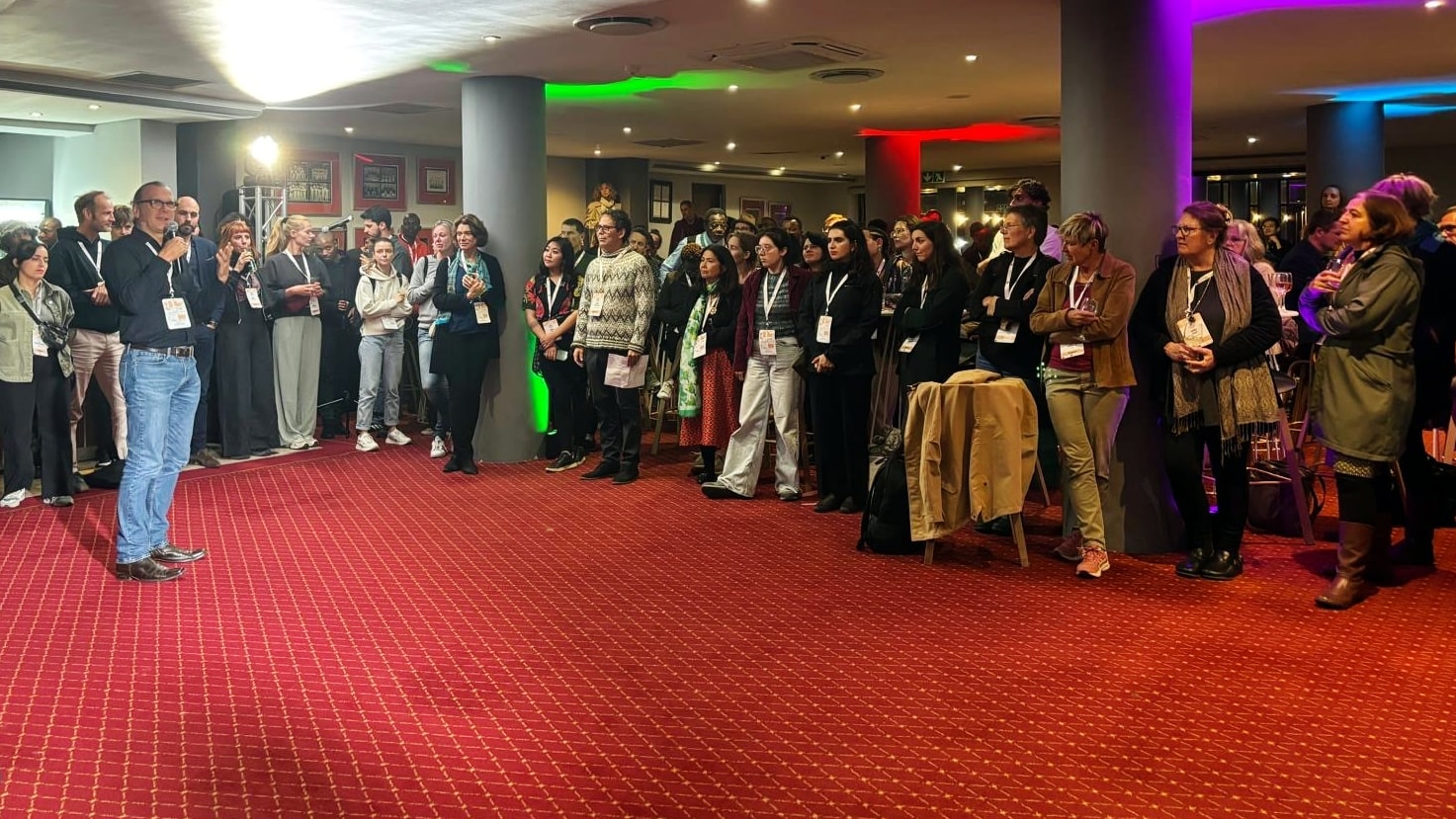
Convening in Johannesburg, South Africa, from 18-21 August, this was the first gathering of its kind in Africa since the 2016 Nairobi Conference on Earth System Governance. Having joined forces with the Transformations Community and the University of Witwatersrand as local host, the 2025 TC/ESG Conference sought to advance sustainability research and discourse at a time when environmental governance, development policy and multilateralism are increasingly under attack. The conference theme, “Navigating Sustainability Transformations Towards Justice and Equity”, set the tone for critical conversations, deliberately emphasizing justice and equity as key ingredients of sustainability transformations at all levels of governance. Bringing together scholars of the ESG Project and Transformations Community, the conference fostered knowledge exchange and co-production across two vibrant international and transdisciplinary research communities, as well as collaborations towards actionable policy and governance research for equitable sustainability transformations.
As a leading supporting partner of the conference, IDOS was visible throughout the four-day event. Contributing to the core conference programme, IDOS activities included an interactive dialogue session on the challenges of climate change adaptation in the southern African region in the light of recent IPCC assessments and the devastating drought and heatwave that had hit vast parts of the region during the 2024 El Nino cycle.
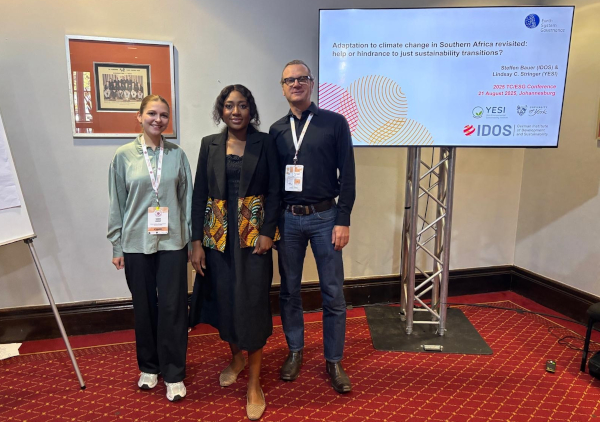
The session was organised by IDOS’ senior researcher Dr Steffen Bauer and comprised case study research from Kenya, Mozambique, Zimbabwe, and Zambia, including papers by Dr Susan Ekoh and Dennis Schüpf. At a different session, Sarah Löpelt presented her research on the generation of integrated knowledge at the science-policy interface in the context of the German Sustainability Strategy (DNS).

Schreibe einen Kommentar