
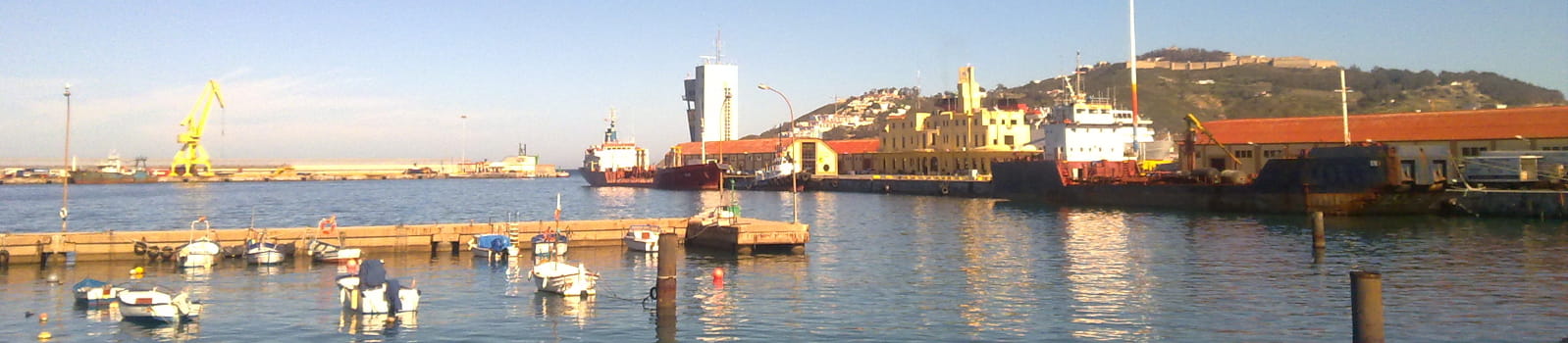
Images of people scaling the fence into Ceuta and Melilla fuel the perception of a loss of control. Yet these people cannot simply travel on to the rest of the EU, nor are its external borders the real threat. Rather, the threats lie in the scapegoating and the knee-jerk call for isolation. Both obscure the view of what could be possible: partnership on equal terms to create opportunities for local youth, regulated entry coupled with justified deportation, and honest information.
What we see are images of 60,000 people crossing the border between Morocco and the Spanish enclaves of Ceuta and Melilla – this area of roughly 31 km² on the African continent is now meant to symbolize the resilience of the entire European Union. What we do not see are the at least 72 people who died in the attempt, nor the reasons why these people are fleeing.
What we also see is how these images are being misused for propaganda: right-wing voices suggest a threat to EU member states and a failure of border security. Italy is calling for Spain to be excluded from the Schengen Area; Trump is using the images for his own demagoguery; and Russia is using them to destabilize the EU.
However, the impression of a loss of control that this creates must not paralyze us or prevent us from viewing the situation constructively and humanely, and from responding accordingly.
A nuanced view of the situation shows that these people do not pose a threat per se, and that they cannot travel from Ceuta and Melilla to the Spanish mainland or to other EU member states. This is because these territories have their own legal status under the Schengen Agreement, which specifically prevents this. The increased border controls announced by France, Germany, and Italy are therefore more a sign of populism than of an informed response. Furthermore, nearly all of the refugees returned to Morocco on Friday and Saturday. In addition, European deportation law is already enforced more strictly in the Spanish enclaves than elsewhere, as collective deportations -so-called “pushbacks”- were permitted there, a practice also upheld by a 2020 ruling of the European Court of Human Rights. On July 8, 2026, Spain’s Supreme Court ruled that these pushbacks from Ceuta and Melilla were unlawful, at least when people reach the border by swimming. This led to the circulation of false reports and to social media posts by refugees who, accompanied by cheerful music, portrayed the successful crossing as easy and quick; both factors contributed to the influx of refugees into the two enclaves.
What we don’t see enough of in current news coverage are the people themselves and what drives them to flee. They are mostly young adults who need and are actively seeking opportunities – who want to take control of their own lives rather than be strung along by countless political promises. The people we saw on social media videos and in news reports are mainly young, some are under-18, who wanted to take advantage of what they believed to be a temporary suspension of border controls on entry. There are no surveys specifically on this group, but studies show a high degree of heterogeneity, which calls for differentiated approaches to policy solutions. One in three Moroccans aged between 15 and 29 is neither in education, employment nor training (the so-called NEETs: Not in Education, Employment or Training). Other are well-educated or trained, but despite all the reports about the shortage of skilled workers, they cannot find a legal way into the EU. Economic growth in Morocco does not benefit them enough because it creates few jobs and because education is in many cases inadequately tailored to the needs of the labour market.
Morocco’s prestige projects and large-scale initiatives suggest progress, but that progress often passes these young adults by. The benefits of economic growth are distributed extremely unevenly, and despite improvements, prospects remain poor – especially in rural areas -as the Moroccan Economic, Social, and Environmental Council has noted. Health and education were central concerns of the Gen Z protests, but what remains of them today? Disillusioned young people who still see some 660 of their peers in prison. Young people for whom neither the institutions newly created after the “Arab Spring” nor the largely peaceful protests of 2025 brought concrete opportunities for political participation. Young adults in whose country climate change is hitting even harder than it does in Europe, and where unemployment has continued to rise sharply – as was the case during the last drought. “These images are unacceptable,” says EU Commission President von der Leyen, but what should truly be unacceptable are the causes of flight.
A look at these underlying factors reveals that the greatest threat is not to the EU’s external borders, but rather the stylized enemy stereotypes and the knee-jerk call for military isolation in many member states. For it is precisely these two reactions that rob us of the leeway we could use to address the challenge constructively and humanely. Constructive means jointly developing concrete solutions that benefit all parties involved, on an equal footing. “Humane” means focusing not on a potential threat, but – in a spirit of solidarity – on the people themselves, rather than on right-wing projections.
In concrete terms, this means creating opportunities for local development, for orderly migration, and for trustworthy and transparent communication.
The EU and its member states should provide greater support for socioeconomic as well as political prospects in countries of origin and transit, such as Morocco, rather than cutting funding in these areas. Development cooperation serves as a valuable foundation for strategic partnerships on an equal footing with countries such as Morocco. Through this, existing programs for joint professional training can be expanded, and investments from development cooperation and the private sector can be combined with concrete progress toward political participation and improved education and health care.
The migration policies of the EU and its member states should harness potential rather than allow themselves to be exploited by right-wing movements, as seen in the current accusations against Spain. Coordinated selective admission, a transparent recruitment system, and circular migration for skilled workers who are often urgently needed, as well as professional integration programs, can create opportunities on both sides of the Mediterranean.
Finally, the EU and its member states must improve their communication: instead of propaganda – which often serves national election campaign strategies – they must communicate nuanced positions and specifically counter misinformation both within and outside the EU. Better information portals and a stronger social media presence regarding legal entry, as well as the consequences of illegal entry, must be strengthened. The new border barrier, which is now being built in response to the events at sea, confirms Europe’s securitized, defence-focused approach. In contrast, the clips circulating on TikTok, Instagram and elsewhere showing young people returning to Morocco could be far more effective: they spread disappointment, disillusionment and explicit warnings to others. “It’s not worth it” – a message that can have an impact if legal migration routes are more accessible and are also communicated in a way that appeals to young people via social media.
What Ceuta and Melilla truly reveal, therefore, is not a threat to the EU, but rather its inability to respond appropriately to right-wing propaganda and to the lack of prospects for young adults south of the Mediterranean.
