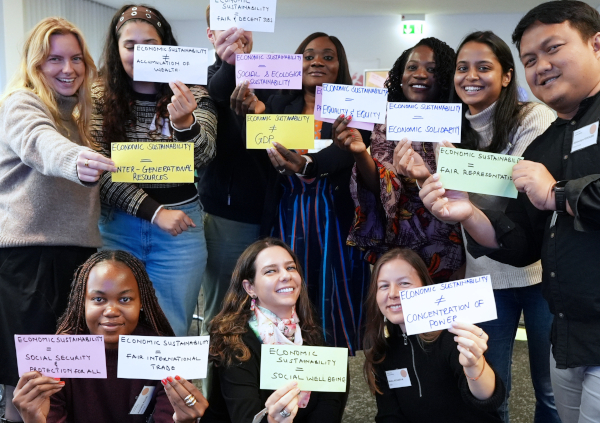
Participants from all three IDOS’ Training Programmes explored the topic of ”polaristion” together.
How can we move beyond polarisation in today’s political debates and jointly imagine what participatory, just and sustainable futures could look like?
That was the challenge at the heart of “Beyond Failure: A Global Citizens’ Assembly for Sustainable Futures”, a simulation game held in Bonn on 8–9 October 2026 bringing together 46 participants from the current cohorts of the Managing Global Governance (MGG) Academy and the Postgraduate Programme for Sustainability Cooperation (PGP), as well as selected alumni from the Shaping Futures Network for this joint activity.
Jointly developed by IDOS and planpolitik, the simulation game “Beyond Failure” provided a hands-on learning experience that illustrates the complexities of global deliberations. Participants not only enhanced their understanding of dynamics in debates but also strengthened their competences in cooperation, diversity, and future-oriented thinking. Networking across training programmes also helped build connections that can support their future cooperative efforts.
Instead of simply discussing the challenges facing our world, participants stepped into fictional roles, navigated dilemmas and worked together as a global citizens’ assembly tasked with developing pathways towards sustainable futures.
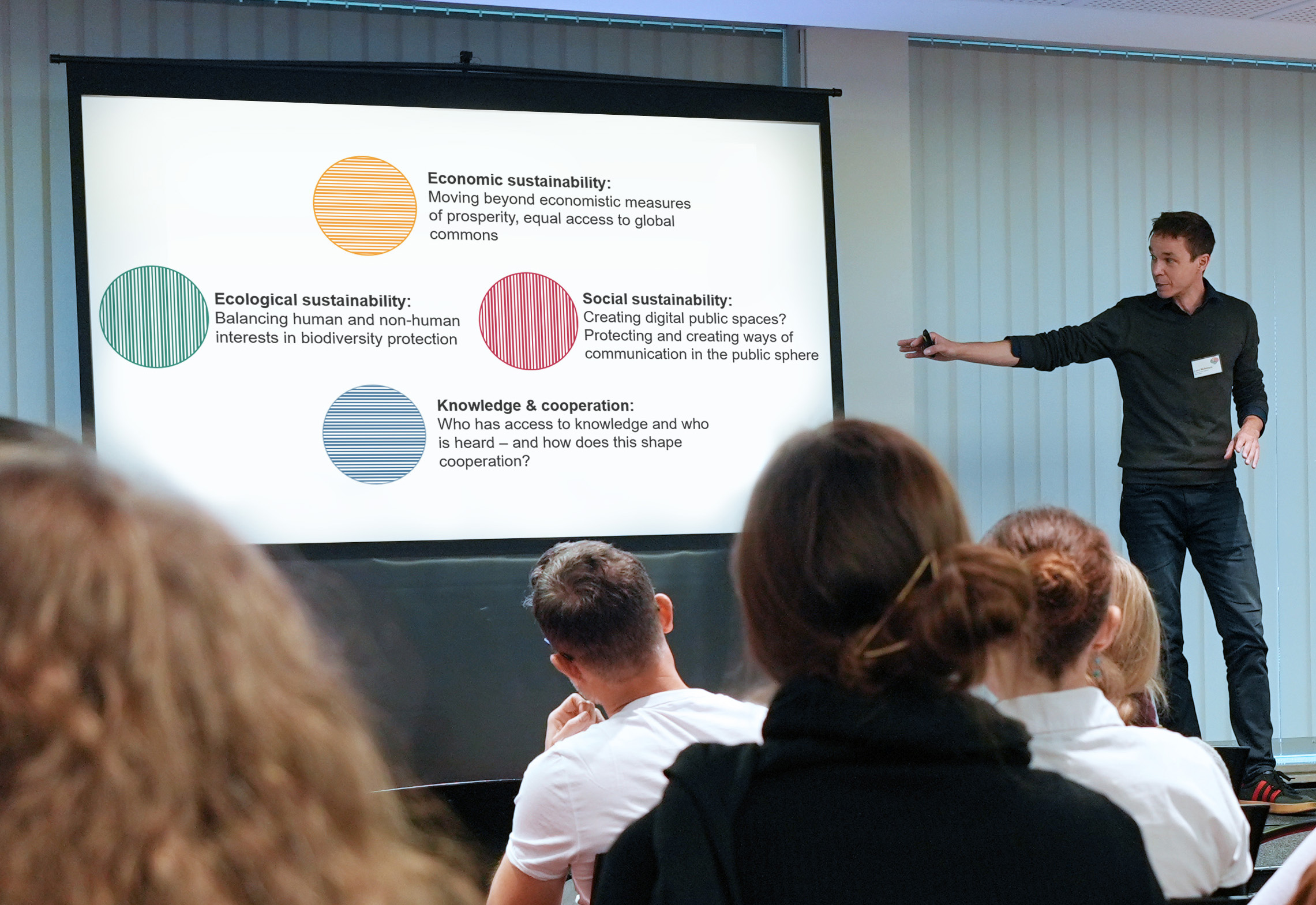
The simulation explored four interconnected dimensions:
- Economic sustainability: How can we move beyond narrow measures of prosperity and ensure fair access to global commons?
- Ecological sustainability: How can human and non-human interests be balanced in efforts to protect the basis of life on the planet?
- Social sustainability: How can we create inclusive digital public spaces and safeguard meaningful communication?
- Knowledge and cooperation: Who has access to knowledge, whose voices are heard, and how does this shape international cooperation?
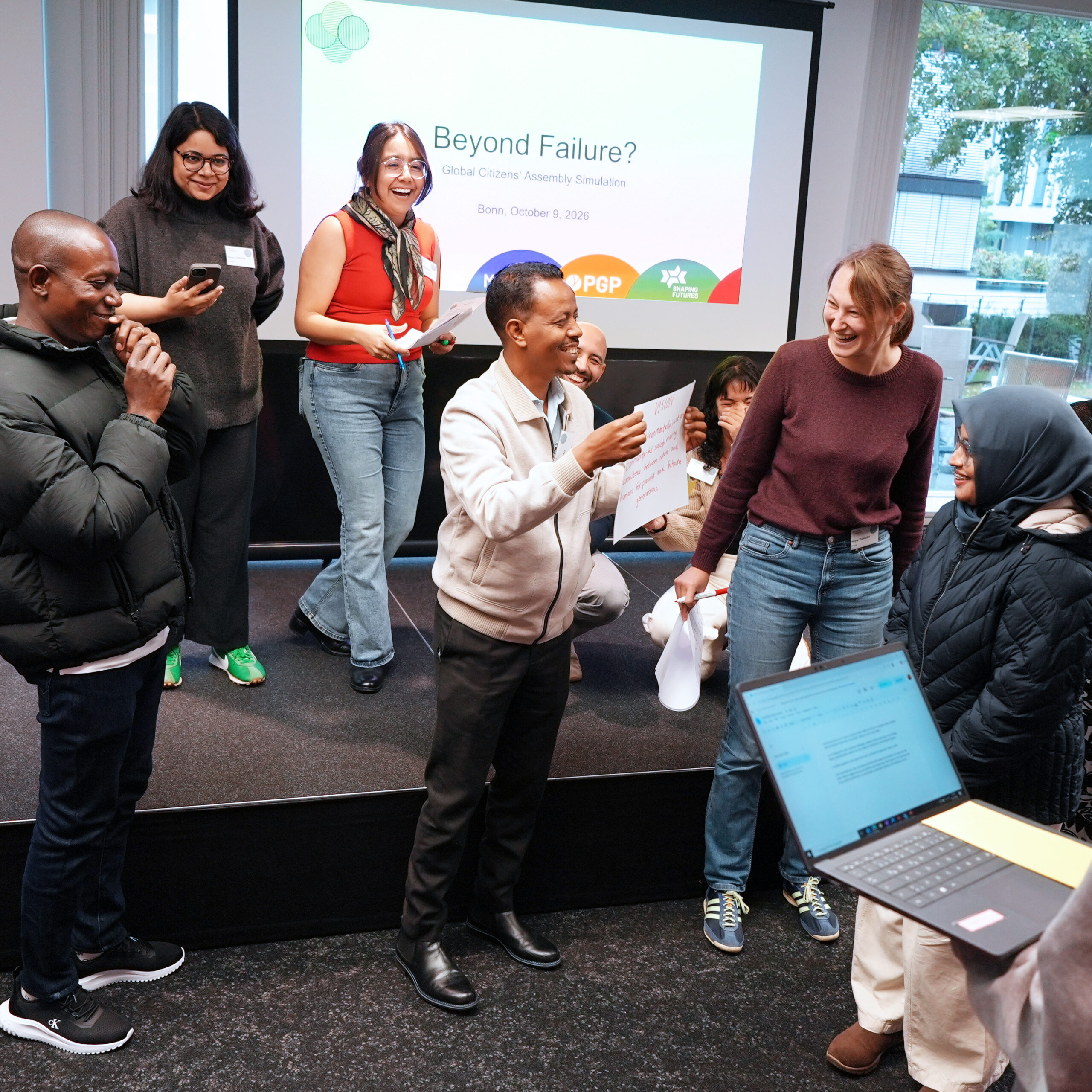
On day one, participants developed shared visions, missions, and goals while navigating the dilemmas within their respective thematic groups. Moving between individual perspectives and collective goals, they explored what it takes to build common ground in a diverse group. On day two, the focus shifted from imagining the future to shaping pathways towards it. Participants developed narratives and innovation strategies designed to translate their shared visions into concrete approaches.
The simulation drew on the principles of sociocracy and Ubuntu, fostering efficient and inclusive group deliberation.
The result? Inspiring narratives, innovative approaches, and plenty of new perspectives on how we can shape more sustainable futures through cooperation and collective action.
