IDOS discussed AI, electoral integrity and depolarisation while presenting its work and training programmes.
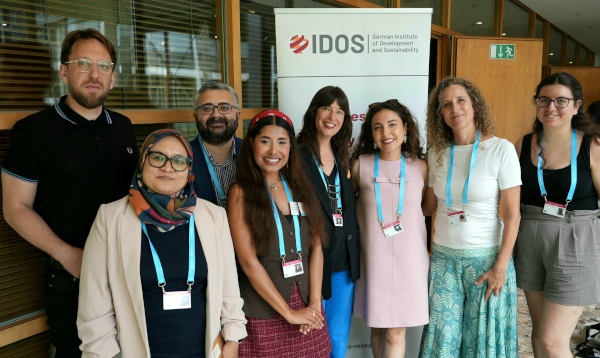
On June 23, IDOS hosted a panel at the Deutsche Welle Global Media Forum at the World Conference Center Bonn titled “How do malicious AI swarms threaten democratic elections?” Organised by Deutsche Welle in Bonn since 2008, the DW Global Media Forum offers an interdisciplinary platform that brings together stakeholders from 100+ countries, with “Journalism out loud” as this year’s motto. The panel featured experts and practitioners from different sectors: Wafa Ben-Hassine (Office of the United Nations High Commissioner for Human Rights), Julia Brothers (National Democratic Institute), Dr Ika Idris (Monash University, Indonesia), and Dr Daniel Thilo Schroeder (SINTEF Digital), moderated by Shristi Mangal Pal (Deutsche Welle).
The panel began with a keynote by Dr Semuhi Sinanoğlu (IDOS), who first introduced IDOS’ growing AI portfolio and featured a recently launched project with DW Akademie and UNDP using a multi-agentic AI structure. Then he emphasised that even though it is possible to deploy AI for good, the risk posed by malicious AI swarms is real and imminent. The effectiveness of foreign information, manipulation, and interference (FIMI) operations has so far been an open empirical question, with evidence suggesting their impact might be more limited than initially assumed. He highlighted that it is about to change with malicious AI swarms. These are AI agents with persistent identities and memory that would come across as a real, diverse crowd of people and could self-coordinate and infiltrate online communities.
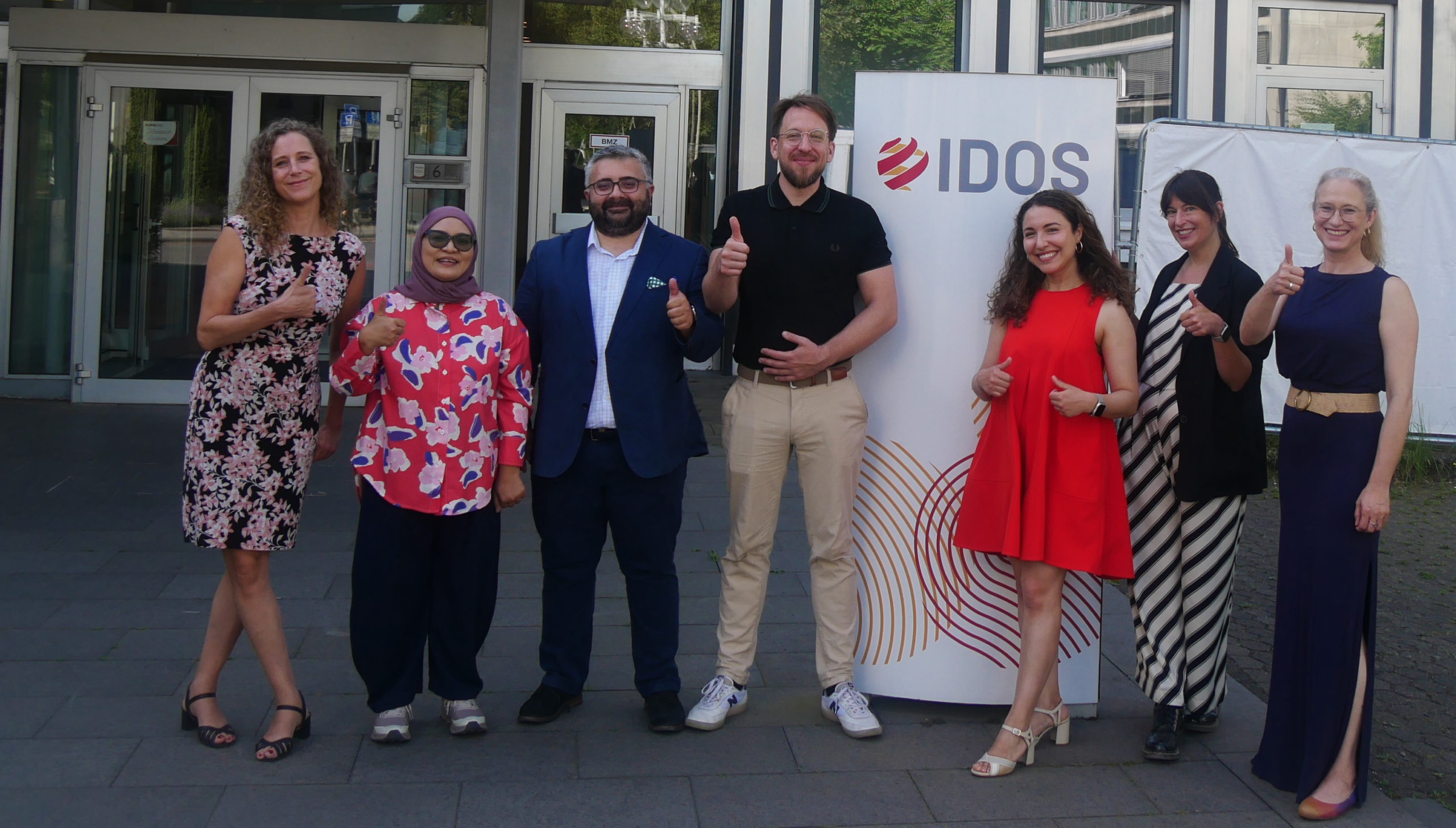
Following the keynote, the panel resumed with a moderated discussion between the panellists, followed by a Q&A with the audience. The key takeaway from these conversations shows how stakeholders should take this issue more seriously. The question is no longer whether content is true or false. It’s whether people are still able to form political opinions on their own. Old FIMI operations aimed to confuse and polarise. But today’s AI is extremely persuasive, can shift beliefs, and is very good at inferring people’s psychological traits. Now the open question is how far these swarms can coordinate and even self-improve. One key issue highlighted was that governments still don’t identify this as a problem, and it is also questionable how much regulatory bodies can be trusted when the same frameworks are used to suppress dissent. Then, panellists discussed how to move forward and how stakeholders can ensure collaboration to address this rising challenge. The next day, our panellists also met with PD Dr Julia Leininger at IDOS and discussed strategies to foster further collaboration.
Throughout the forum, IDOS also welcomed visitors to its information stand. Staff introduced the Institute’s research, policy advice and training opportunities, including the Postgraduate Programme for Sustainability Cooperation, the Managing Global Governance Academy and the Shaping Futures Academy. The conversations led to valuable new contacts with media professionals interested in expert perspectives on international development and global affairs.

Schreibe einen Kommentar