IDOS suggests priorities for ambitious successor framework.
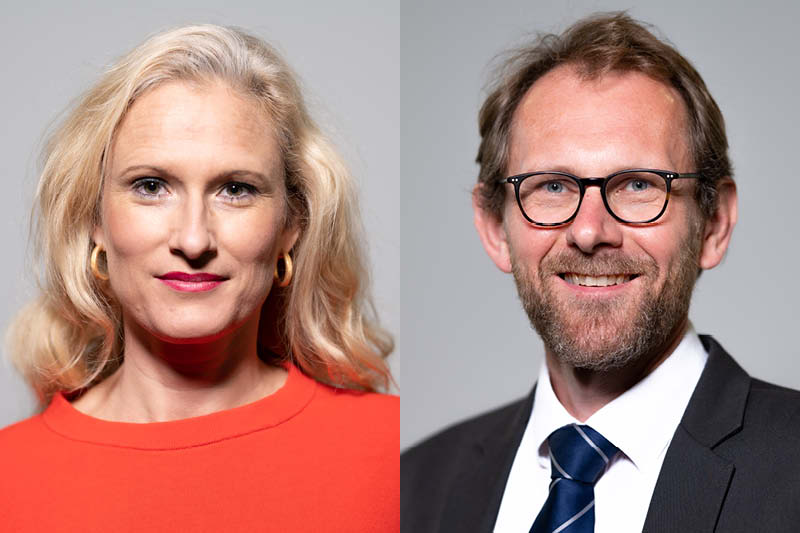
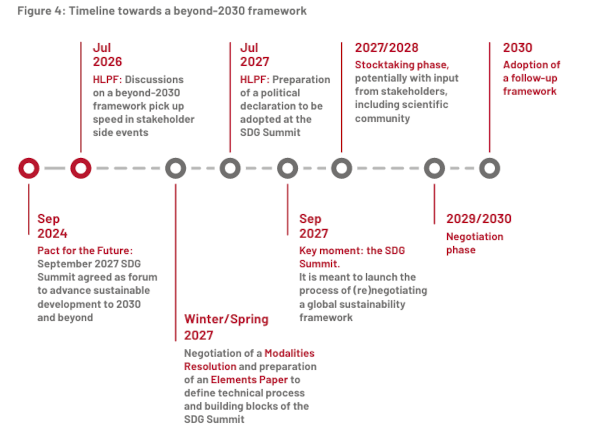
With the SDG Summit in September 2027 less than a year away, the question of what comes after the 2030 Agenda for Sustainable Development is becoming increasingly urgent. Deputy Director (interim) Dr Axel Berger has argued in a recent contribution together with PD Dr Julia Leininger, Head of Department Transformation of Political (Dis-)order at IDOS, that the sustainability agenda is increasingly becoming part of geopolitical rivalry. Across major powers, sustainability has become a geopolitical instrument or adversary rather than a shared agenda, and in Europe it is often treated as a secondary policy field. Making it all the more important that Germany, together with like-minded partners in Europe and beyond, now lays the groundwork for an ambitious successor framework.
Three priorities stand out:
- a whole-of-government approach that treats sustainability as a cross-cutting task spanning foreign, economic and innovation policy alongside environment and development;
- early coalition-building in the EU and with middle and regional powers across all continents, given that the SDGs were never an agenda of high-income countries alone; and
- a stronger focus on the benefits, not only the costs, of sustainable development, to build the societal backing that lasting engagement requires.
The window is narrow. Those who build coalitions now can shape the process. Those who wait cede that space to others.