A successor to the 2030 Agenda requires societal negotiation, new alliances and action across governance levels.
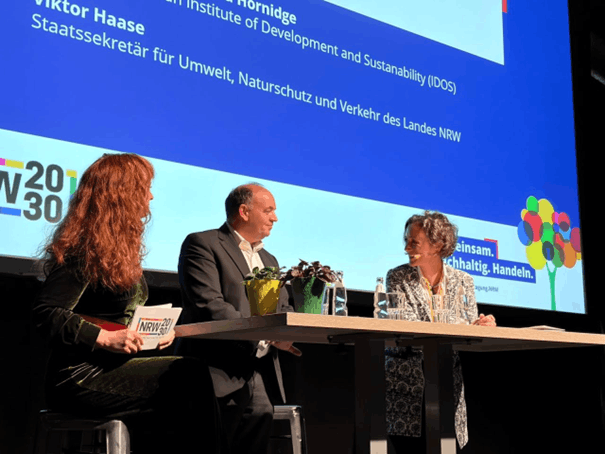 The question of what comes after the Sustainability Agenda 2030 has become an important topic across conference stages, and so it did at the Nachhaltigkeitstagung.NRW, where IDOS director Prof. Anna-Katharina Hornidge addressed a full audience on the question what comes after the Agenda 2030, and which challenges may shape a possible successor framework. Her central message was: “The successor agenda must be a societal negotiation process” – one that requires the 2030 Agenda and the Paris Agreement as orientation frameworks, a joint understanding of sustainability and security, and new alliances and partnerships.
That NRW itself, through its sustainability strategy, can play an active role in shaping sustainable futures was a welcome reminder that sustainable transformation is not driven by any single level of governance, but emerges through action and interaction across scales. Anna-Katharina Hornidge also continues to advocate for this in her advisory role as co-chair of the North Rhine-Westphalia (NRW) Sustainability Advisory Council, which held its first meeting of the new term in September.
