A central IDOS contribution to this year’s HSC was the organisation of a high-level roundtable on the future of global sustainability governance beyond 2030.
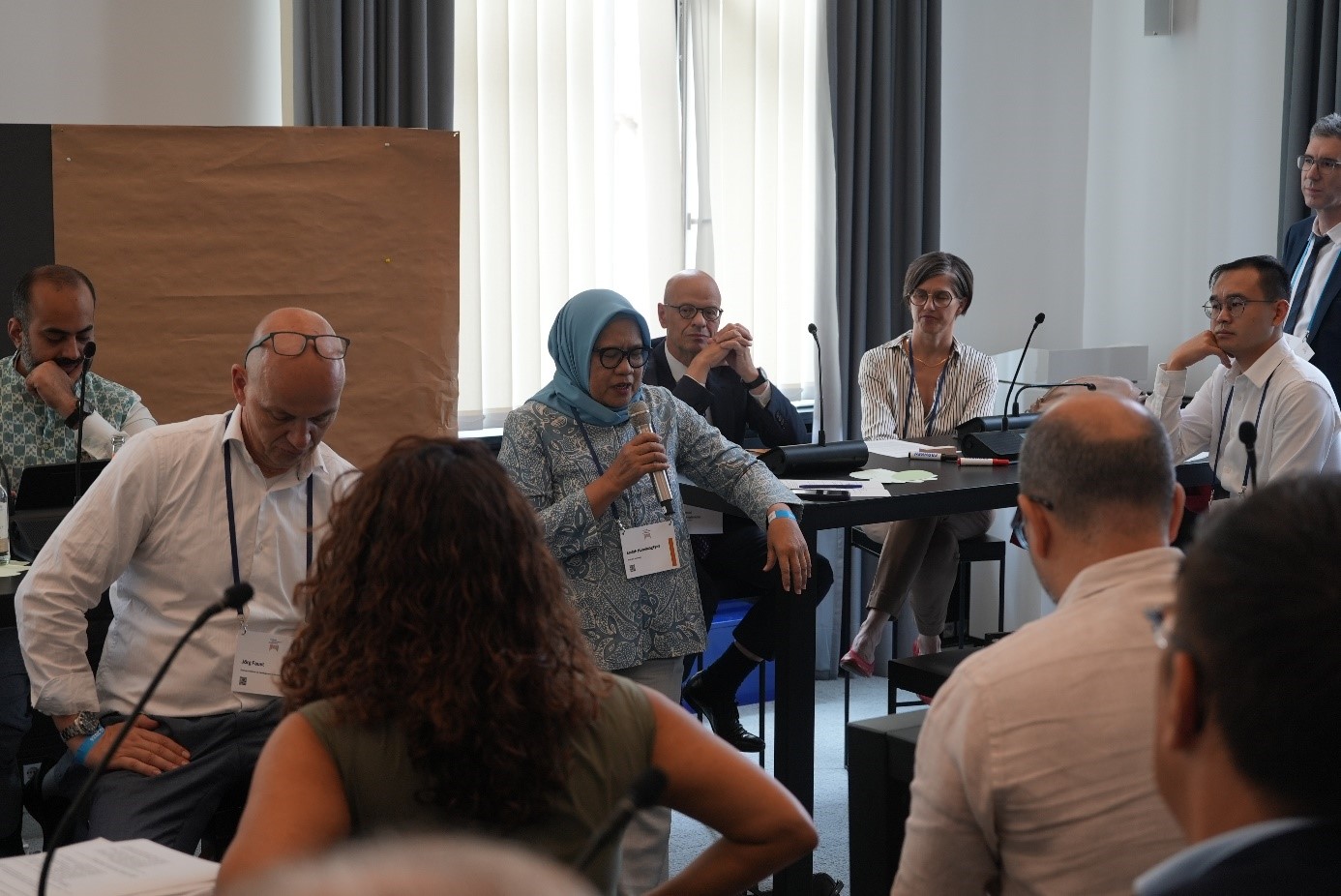
Co-organised with the Stockholm Environment Institute (SEI), Southern Voice and Monash University, the by-invitation-only session brought together approximately 45 representatives from governments, international organisations, business, civil society and academia. Among the participants were members of IDOS’s international knowledge cooperation and training network Managing Global Governance (MGG), who joined the HSC session following a IDOS Beyond-2030 conference held in Bonn directly ahead of the conference, bringing their insights into dialogue with a broader and more diverse group of stakeholders. The session aimed to build momentum for the 2027 SDG Summit and to identify the narratives and partnerships needed for an inclusive, action-oriented and science-based beyond-2030 discussion. It drew on preparatory work, including a comprehensive, unpublished, mapping of actor positions on a potential beyond-2030 global sustainability framework, drawing on interviews, two IDOS roundtables, and an analysis of policy documents from across regions. It assesse the positions and interests of key state and non-state actors, identifies four stylised positions toward a successor framework, and explores how different actors and alliances can constructively contribute to shaping the process ahead of the 2027 SDG Summit.
Managing Global Governance Network at the HSC
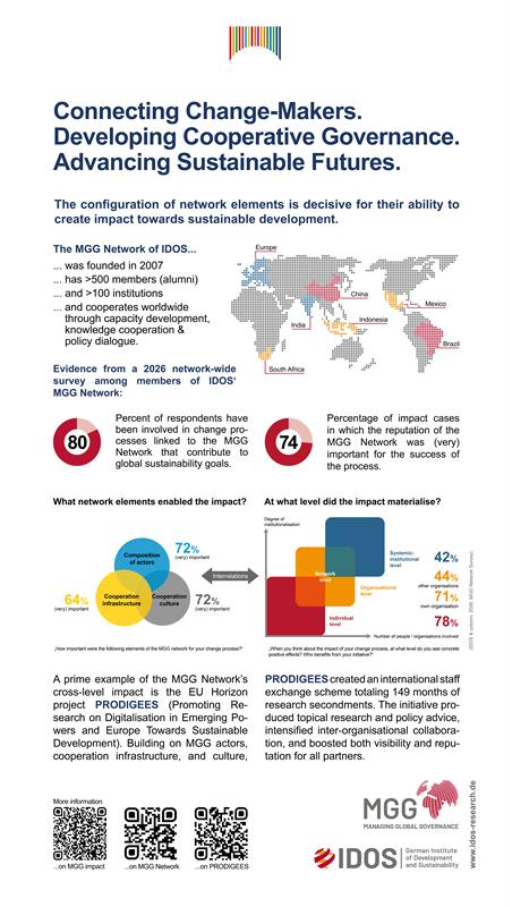
In addition, the MGG network participated in a HSC Gallery Walk with a poster showcasing and reflecting on the importance of global governance networks.
Drawing on a 2026 survey of IDOS’ Managing Global Governance (MGG) Network, it showed that 80% of respondents had been involved in change processes contributing to global sustainability goals, and that in 74% of impact cases the network’s reputation was (very) important for the process’ success.

Schreibe einen Kommentar