
Prof. Anna-Katharina Hornidge was an invited speaker at two sessions on academic freedom, co-hosted by the German Commission for UNESCO, the University of Hamburg, the Volkswagen Foundation, and the Michael Otto Foundation for Sustainability.
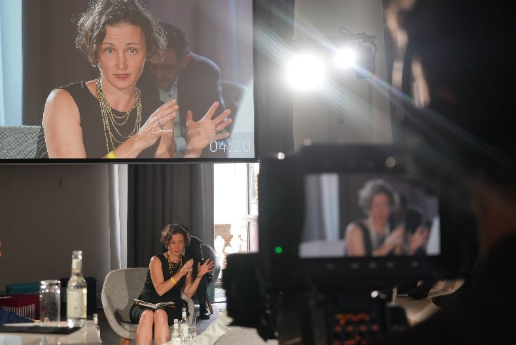
In the panel “Sustaining Academic Freedom, Sustaining the Future?”, moderated by Dawn Freshwater, Executive Director of the Worldwide Universities Network (WUN), she joined Tshilidzi Marwala, Rector and Under-Secretary-General of the United Nations University, and Michael Werz, Senior Fellow at the Council on Foreign Relations, to debate the pressures academic freedom and free scientific cooperation are experiencing worldwide, and their key role for sustainable transformations. Prof. Hornidge contributed on effects of geopolitication and self-policing in science-policy-interfaces, taking the recent G7 summit as example. This concerns, she argues, which topics are being discussed and terminologies used, exemplified by discussions on ‘insurance-related effects of extreme weather events’ rather than ‘climate change’. Further, it concerns which normative frames, such as the 2030 Agenda or the Human Rights Charta, are being referred to as guiding policy documents in the final communiqué.
An accompanying accelerator session “Academic Freedom Under Pressure: Sustainability at Risk” brought together experts across sectors and countries for dialogue and collective insight on these issues, with the aim of forming new networks protecting independent science as a cornerstone of sustainable development of societies worldwide.
In addition, Anna-Katharina Hornidge contributed a keynote to an accelerator session organised by the Observer Research Foundation (ORF) India on the challenges of the energy transition in Germany. Here she drew on the recently published flagship report ‘Environment shapes Security’ by the Scientific Advisory Council on Global Environmental Change to the German Government (WBGU).
Future of Development Cooperation
Prof. Hornidge also participated in a meeting of the Future of Development Cooperation Coalition, to which she serves as an academic advisor. The meeting served the purpose to collect feedback on first principles for development cooperation formulated by the Coalition.
Network Conversations and Pockets of Hope
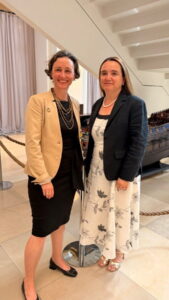
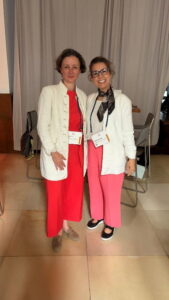
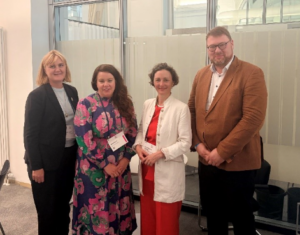
The HSC offered an invaluable opportunity to strengthen and build networks to advance the SDGs and lay the groundwork for a beyond-2030 framework. In conversations with, among others, Norway’s State Secretary to the Minister of International Development, Stine Renate Haheim, International Union for Conservation of Nature (IUCN) Director General Dr Grethel Aguilar, and CGIAR Executive Managing Director Dr Ismahane Elouafi, Prof. Hornidge and IDOS colleagues reflected on current threats to sustainable development yet also on pockets of hope, opportunities for acceleration, and the many actors who remain committed to the SDGs, which took centre stage at this year’s HSC.

Schreibe einen Kommentar