The 2026 HLPF from 7 to 15 July in New York brought the international community together to assess progress in implementing the 2030 Agenda.
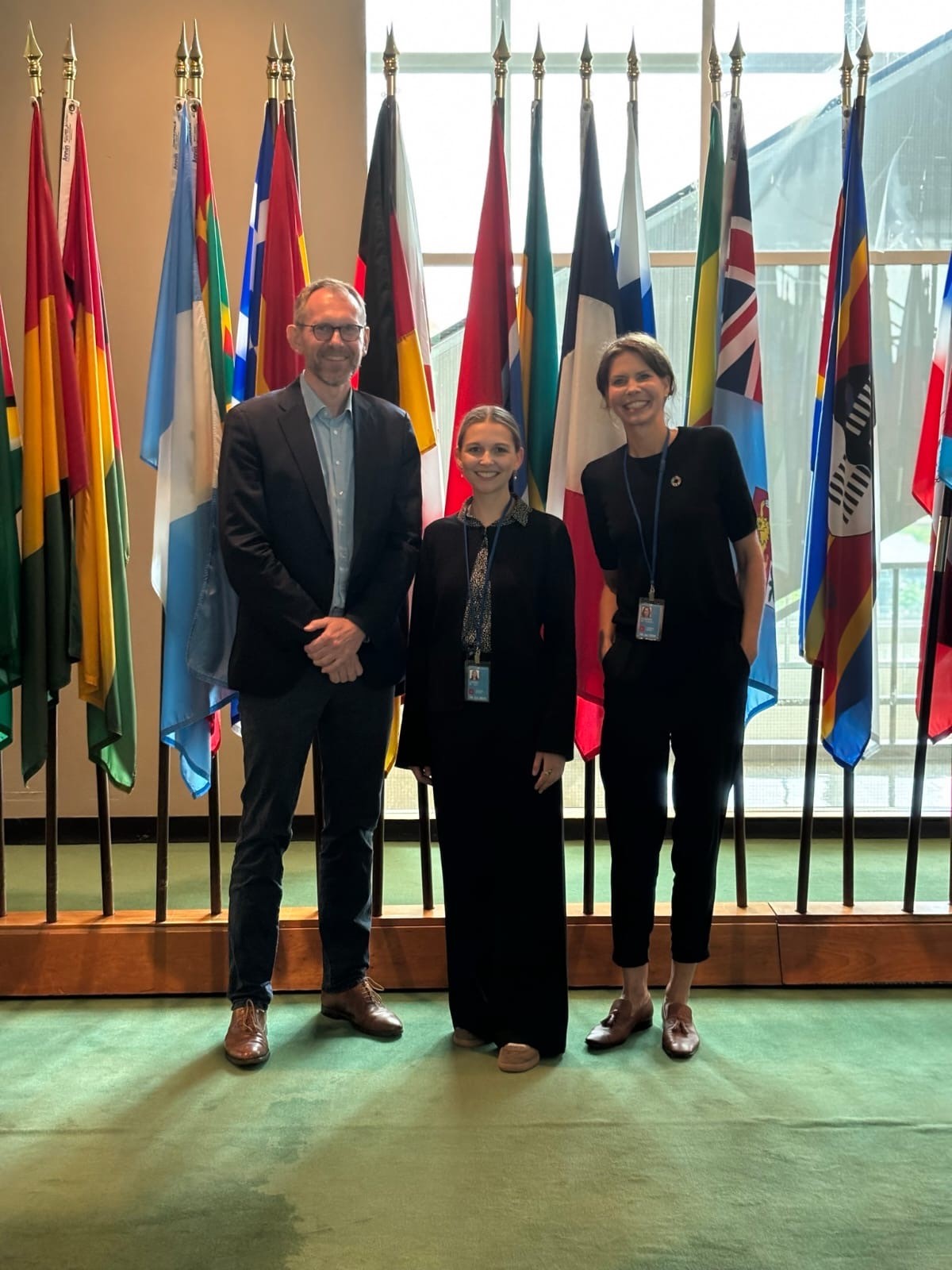
The team from the Sustainable Development Solutions Network (SDSN) Germany, comprising Executive Director Dr Axel Berger and Network Manager Sarah Löpelt, was present as part of the German delegation.
This year’s theme for the forum was ‘Transformative, equitable, innovative and coordinated actions for the 2030 Agenda and its Sustainable Development Goals for a sustainable future for all’. The substantive reviews focused on SDGs 6 (Clean Water and Sanitation), 7 (Affordable and Clean Energy), 9 (Industry, Innovation and Infrastructure), 11 (Sustainable cities and communities) and 17 (Partnerships for the Goals). In the run-up to the HLPF, SDSN Germany organised four roundtables on the focus SDGs, which informed the German delegation’s position.
SDSN Germany contributed to various side events in New York, including:
- Round Table Dialogue “Exchanging Perspectives and Exploring Opportunities on the Post-2030 Agenda”, organised by Keio University, SDSN Japan, the International Peace Institute (IPI), SDSN Netherlands, The Beyond Lab at UN Geneva and SDSN Germany, 8 July, 1.15 pm – 3.00 pm at the International Peace Institute
- Side event “Science for SDGs & Societies: How to make knowledge actionable?”, in cooperation with the German Centre for Research and Innovation (DWIH) New York, 9 July, 11.30 am – 12.45 pm, Bahá’í International Community Centre
- Side event “Transforming The World After 2030. A multilevel and multi-stakeholder dialogue on the post-2030”, organised by the Government of Catalonia, Catalunya 2030 and CATESCO, 13 July, 3.00 pm – 4.30 pm, Church Centre for the UN (8th Floor)
- Side event “Co-creating Pathways for the Sustainability Agenda: Peer Learning for the Future”, 14 July, 18:10 – 20:00, Mission of Switzerland to the United Nations in New York
In particular, experiences from the implementation of the Sustainable Development Goals (SDGs) were shared and perspectives on shaping the beyond-2030 agenda were exchanged. Discussions focused, for example, on synergies and trade-offs between the goals, the greater integration of ‘beyond GDP’ approaches, international spillover effects and intergenerational justice, as well as issues of governance and institutional reform.

Schreibe einen Kommentar