
IDOS researcher Dr Aparajita Banerjee contributed to several COP30 events aimed at aligning climate action with social justice and sustainable development. The sessions highlighted scientific insights on new NDCs, governance challenges and the central role of Indigenous Peoples and local communities in achieving just energy transitions.
Aparajita Banerjee contributed to the event organised by the German COP 30 Pavilion in Belem in the panel discussion entitled „State of play in new NDCs: Scientific insights, social justice and development implications“ on 12 November 2025. IDOS co-organised this event with Climate Analytics and New Climate Institute. Colleagues from Climate Analysis presented the latest scientific assessment of Nationally Determined Contributions (NDCs) and their compatibility with limiting warming to 1.5 °C. The New Climate Institute presented the most recent analysis from its Climate Action Tracker of NDCs submitted by the end of September 2025. Aparajita Banerjee, from IDOS, presented IDOS research findings from the NDC-SDG connection tool on the need for NDCs to align with the 2030 Agenda for Sustainable Development. The core argument of the presentation was that the new set of NDCs should also be implemented in such a way that the policies also help achieve national SDG commitments, for example, Gender Equality (SDG 5) and Reduced Inequality (SDG 10) to achieve just and fair climate mitigation and adaptation outcomes.
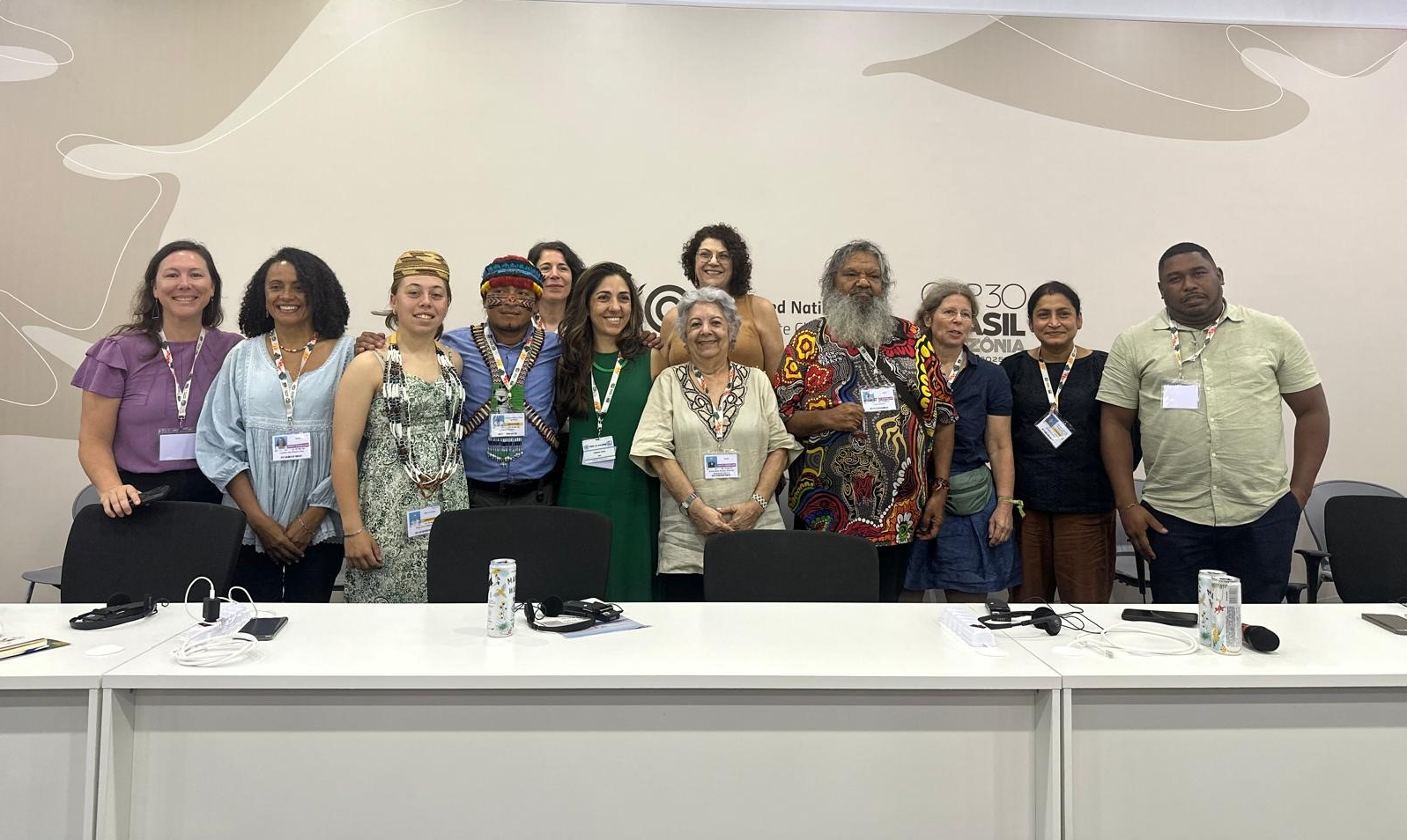
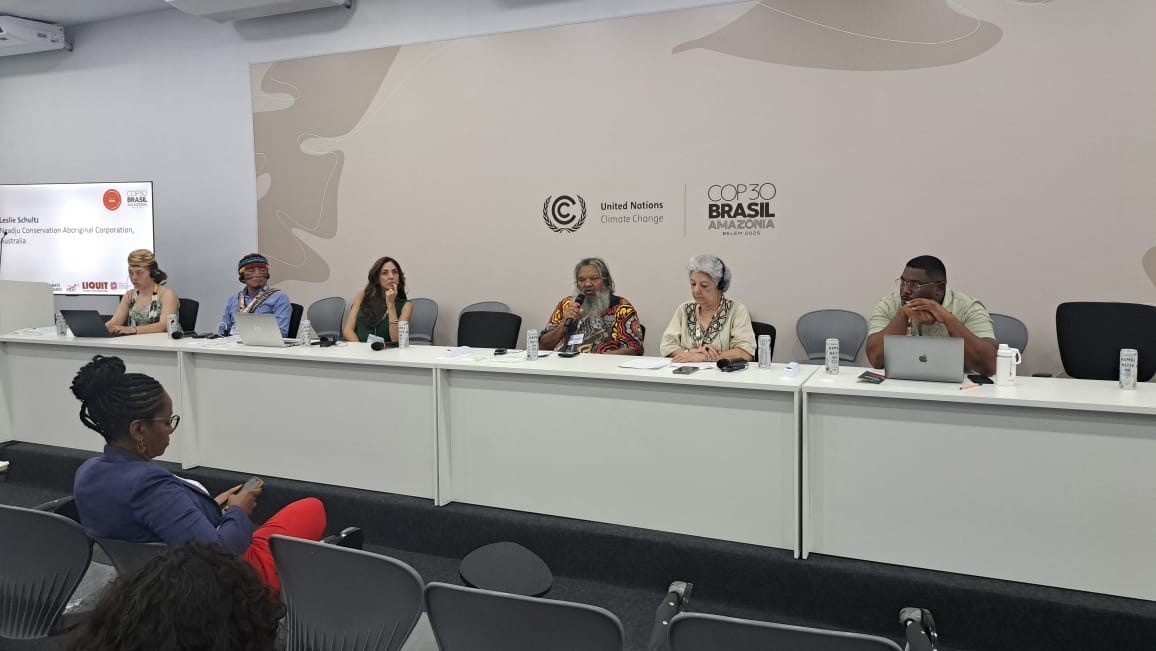
Aparajita Banerjee has been an observer of the Local Communities and Indigenous Peoples Platform (LCIPP) since COP 28, tracking the Facilitative Working Group’s activities, which serves as a constituted body to implement its functions. The LCIPP is established under the Paris Agreement to enhance engagement and knowledge-sharing among indigenous peoples, local communities, and the UNFCCC process. Building on this research and networking experience and to further highlight the role of Indigenous Peoples and local communities in just transition, she co-organised a UNFCCC Official Side Event entitled: „The Central Role of Indigenous Peoples and Local Communities in Just Energy Transitions“. It took place on 13 November and was organised in collaboration with the Institute of Development Studies, the American Anthropological Association, the Climate Alliance (Italy & Austria) and the Instiuto de Ecología y Anthropología de Accíon (INFOE). Members from indigenous and local communities from Ecuador, Brazil, Australia and the United States shared their lived experiences. They spoke of dismantling large hydroelectric dams on the Klamath river in Western USA. They also described the useof solar boats for fishing and transporation in Equador. Further discussions covered the impacts of fossil fuel extraction and militarisation on quilombola Afro-Brazilian communities in Amazonia. Speakers also addressed the effects of lithium mining on water and soil in the lithium triangle region of Latin America as well asnew relationships being forged with the private sector for a beneficial outcome for Aboriginal People in energy transition and mining in Australia. The Office of the United Nations High Commissioner for Human Rights (OHCHR) selected the event as part of the Justice and Human Rights Days, held between 12 and 13 November.
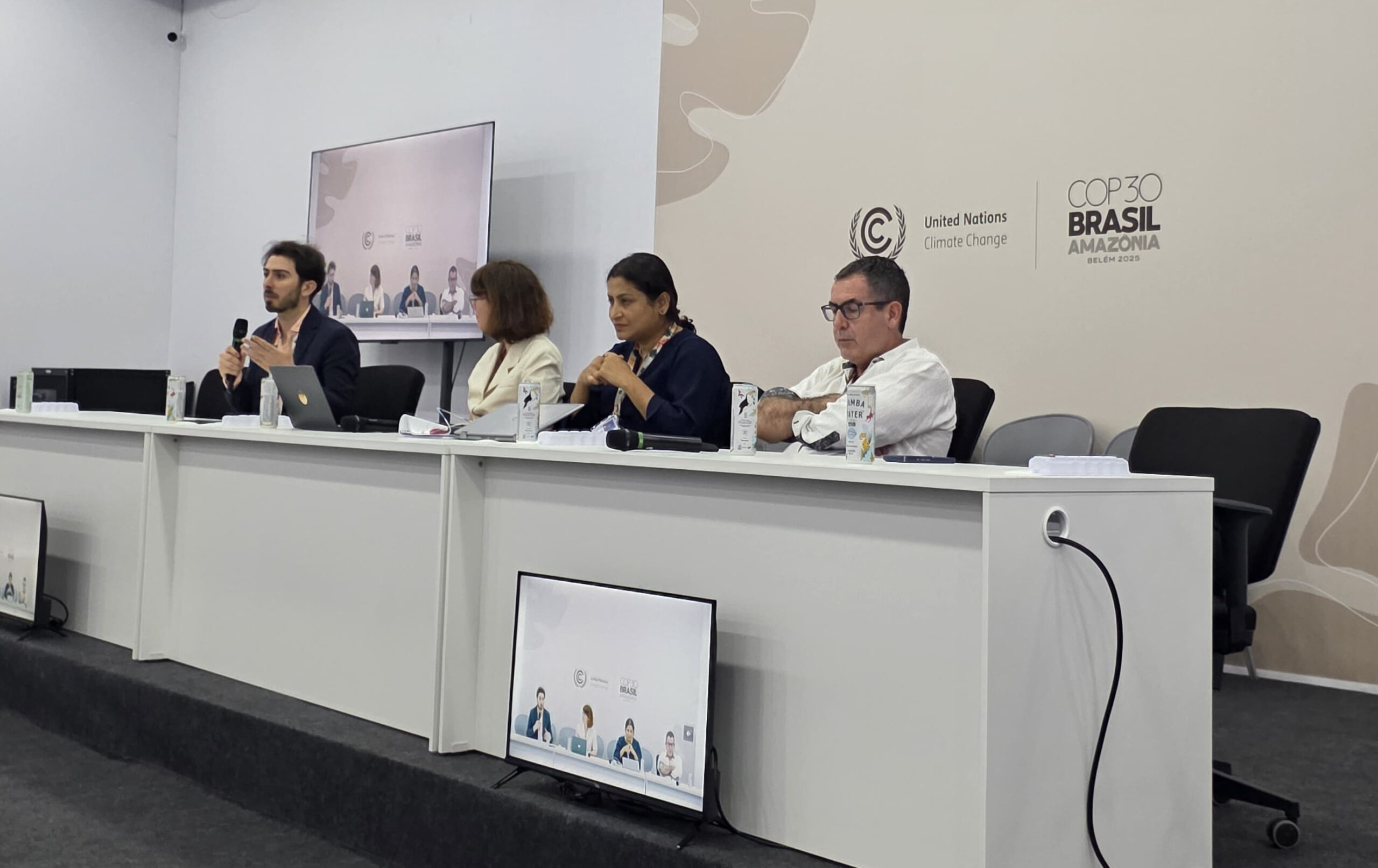
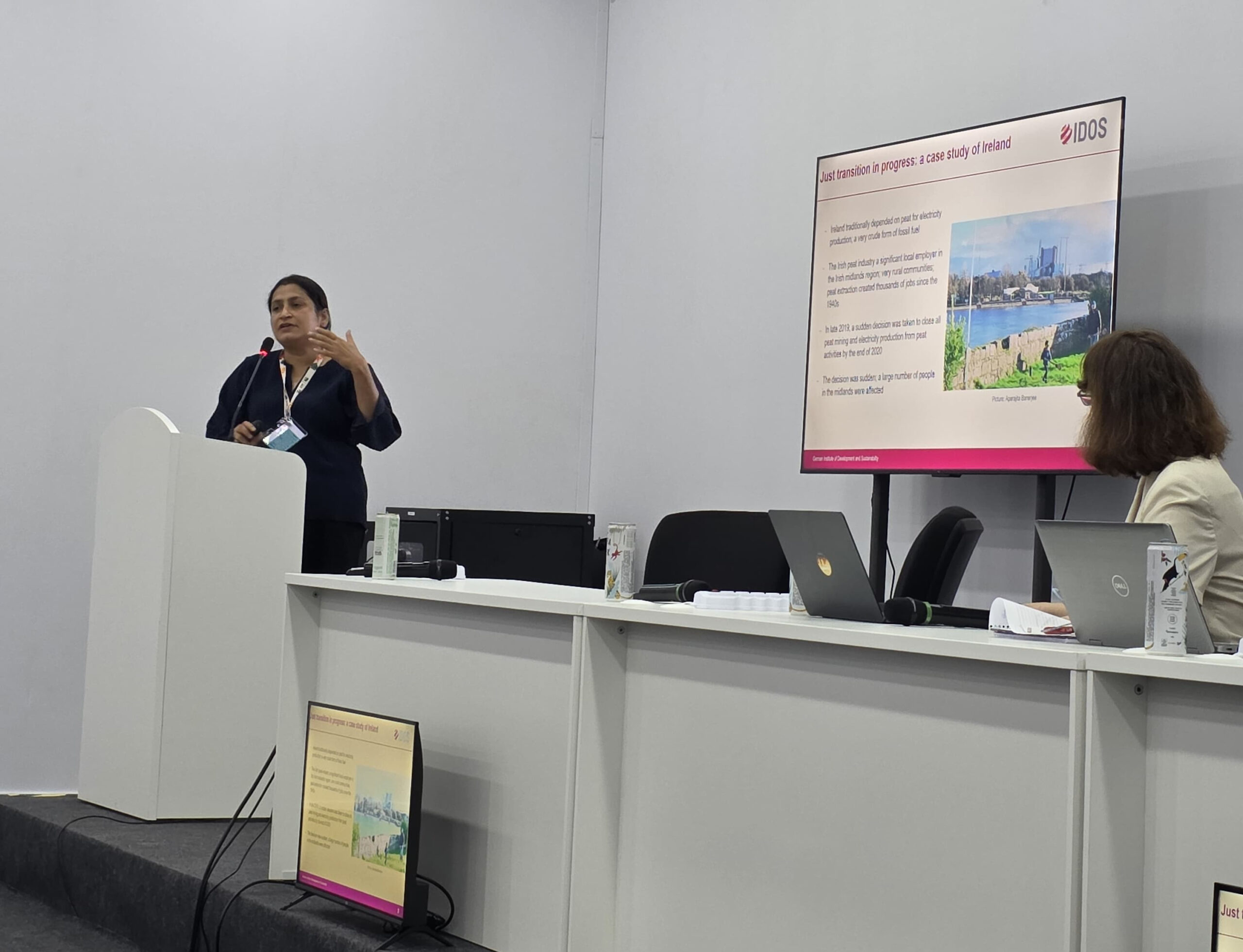
In addition to these contributions, Aparajita Banerjee was a co-panelist at the UNFCCC Official Side Event: „Legal and governance Innovations for ambitious just transitions: Learnings from design and implementation“. The event, organised by the Grantham Research Institute on Climate Change and the Environment of the London School of Economics, POLEA (Environmental Policy and Legislation) Mexico, Interparliamentary Union, and the Elcano Royal Institute, Spain, was a significant platform for discussing crucial challenges in implementing just transition policies. Aparajita Banerjee presented her research on the governance challenges and stakeholder interpretations of a just transition in the European context, aligning with the thematic focus of the event.

Schreibe einen Kommentar